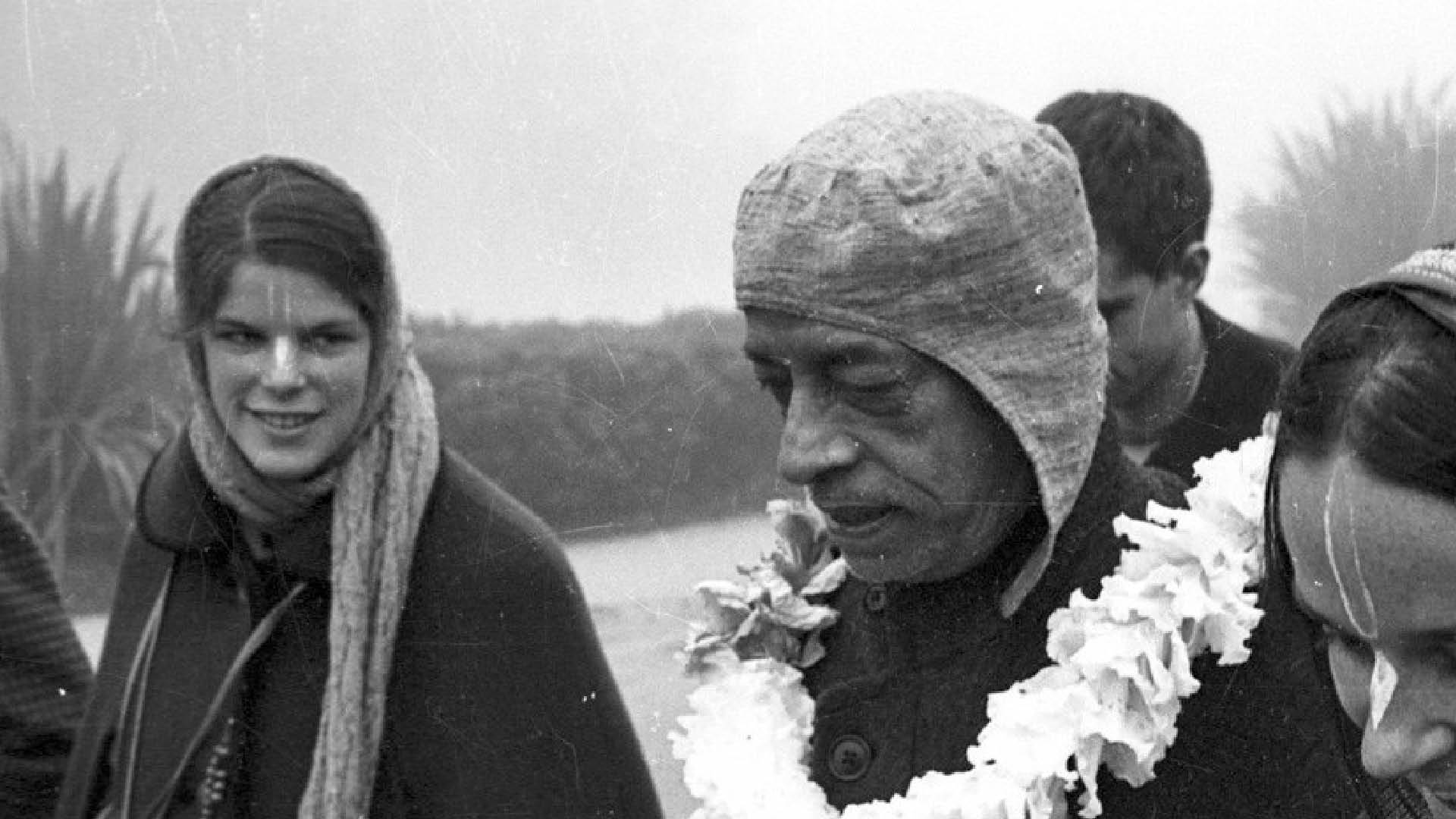
By Ajit Krishna Dasa
8 November 2025 — Bhaktivedanta Manor, UK
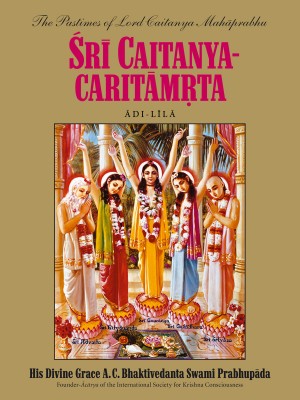
During a class at the Bhaktivedanta Manor, Malati Devi Dasi recounted a well-known episode from Śrī Caitanya-caritāmṛta where Lord Caitanya Mahāprabhu corrected a single-word alteration made by Sarvabhauma Bhaṭṭācārya, the renowned scholar of Jagannātha Purī.
After becoming a devotee, Sarvabhauma was so overwhelmed with joy that he modified the word “mukti-pade” in Śrīmad-Bhāgavatam 10.14.8, replacing it with “bhakti-pade.” Although his intention was devotional, Mahāprabhu corrected him, explaining that “mukti-pade” is already a beautiful name of Kṛṣṇa, and śāstra must not be altered based on sentiment or preference.
Malati Devi Dasi drew a direct parallel to modern tendencies to edit sacred texts:
“Nowadays we also have people who like to change words from the holy scriptures, and some of us don’t appreciate it very much. … Śrīla Prabhupāda commented, ‘Write your own.’ In other words, one shouldn’t change. You can write your own.”
Her words are especially significant in light of the Arsa-Prayoga principle, which holds that the words of the ācārya are sacred and should not be edited or “improved” posthumously – like it has been done by Jayadvaita Swami, Dravida Dasa and the BBTI. Just as Mahāprabhu upheld the integrity of the original Bhāgavatam verse, devotees today are called to preserve Śrīla Prabhupāda’s books – like his Bhagavad-gita As It Is – exactly as he approved them — without revision or re-interpretation.
Three Key Points to Note
- Malati Devi Dasi’s Personal Stance
While Malati Devi spoke strongly against altering śāstra or works of ācāryas, it is not entirely clear what her full position is regarding the specific changes made to Śrīla Prabhupāda’s books. We respectfully invite her to elaborate further — especially given her stature as one of Śrīla Prabhupāda’s earliest and most respected disciples. - The Arsa-Prayoga Principle
This sacred principle — “Do not correct the ācārya” — has historically been recognized throughout the Vaiṣṇava tradition. Śrīla Prabhupāda himself invoked this principle when arguing against revising earlier editions of Bhagavad-gītā and Bhāgavatam by other commentators. “Write your own,” he said. Changing the master’s work, even with good intentions, severs the disciplic link by overlaying the disciple’s mind over the guru’s words. - The Lesson from Sarvabhauma Bhaṭṭācārya
Sarvabhauma’s change of one word was born of devotion, but Mahāprabhu still corrected it. If the Lord Himself did not approve of devotional word-swapping, what to speak of posthumous textual reconstruction by conditioned disciples decades later? The story demonstrates that no matter how exalted the editor or emotional the inspiration, śāstra and ācārya-vāṇī are not ours to adjust.
The full transcription, audio and video excerpt from Malati Devi Dasi’s class will be included below for reference.
If nothing else, the class was a timely reminder that great caution — and deep humility — is required when dealing with the words of the Lord and His pure devotee.
Video:
Audio:
https://drive.google.com/file/d/1KkVZgvY94F6IgLG0dOlYsC_aTGslC2kn/view?usp=drive_link
Full transcription (made with AI):
“So Mahaprabhu said, today I have been transported beyond the three worlds and I’ve been taken to Vaikuntha. All my desires have been fulfilled simply because Sarvabhauma has developed faith in Mahaprasad. And as a result of this, his attitude, Sarvabhauma’s attitude has also changed. And his conversion, it was like a conversion on that day. So he recited a verse of the Bhagavatam, and in that verse, in his newfound ecstasy and realizations, he changed one word. So I think nowadays we also have, we also have people that like to change words from the holy scriptures, and we don’t appreciate, some of us don’t appreciate it very much. So he altered one word. So the verse is well-known, 10.14.8 [Malati recites the Sanskrit], and here’s what he changed. So in the original version, it’s not bhakti-pade. And the verse in English, one who lives his life while joyfully seeing everything as your compassion, meaning the Lord’s compassion, so one who lives his life while joyfully seeing everything as your compassion, even as he experiences adverse conditions arriving from his past deeds, and constantly, nonetheless, constantly pays obeisances to you with his mind, words, and body, is certain to inherit a place at your lotus feet, the object of all devotion. So the original word was mukti-pade, and he changed that mukti-pade to bhakti-pade. And Mahaprabhu explained that there’s no need to change the words of mukti-pade, the source of liberation. It’s a epithet for Krishna. And Vasudeva answered, you’re quite correct to say that the words mukti-pade refer to Krishna, but the word mukti was used customarily in the sense of impersonal liberation, and thus it didn’t bring the same great pleasure as the word bhakti. So that, you know, for somebody who’s maybe not quite as astute, that may ring a bell. Yeah, that’s right. But that’s not how you approach a shastra, and particularly if your books are coming to you from jagat guru Srila Prabhupada, one should be very circumspect. So the other, when the other scholars in Puri heard that Sarvabhauma Bhattacharya had been converted to devotion to Krishna, because he’d been, you know, he’d been an impersonalist. And when they heard about this conversion to Krishna, then all of them took shelter of Caitanya Mahaprabhu. You know, like our verse from the Gita, that whatever the great man does, the common man will follow. He was a great man, he was a much revered and respected personality, and now he was joining the cult of Chaitanya Mahaprabhu. And so they also followed, just like by getting the Beatles to chant Hare Krishna, by getting George in particular, it affected generations. Even to this day, people come across, oh, George Harrison chanted Hare Krishna, and they see the Krishna book with his signature, and immediately they’re attracted. But regards to changing the original text of the Shastra, Srila Prabhupada commented, write your own. In other words, one shouldn’t change. You can write your own.”


 Arsa-Prayoga
You must be logged in to post a comment.