


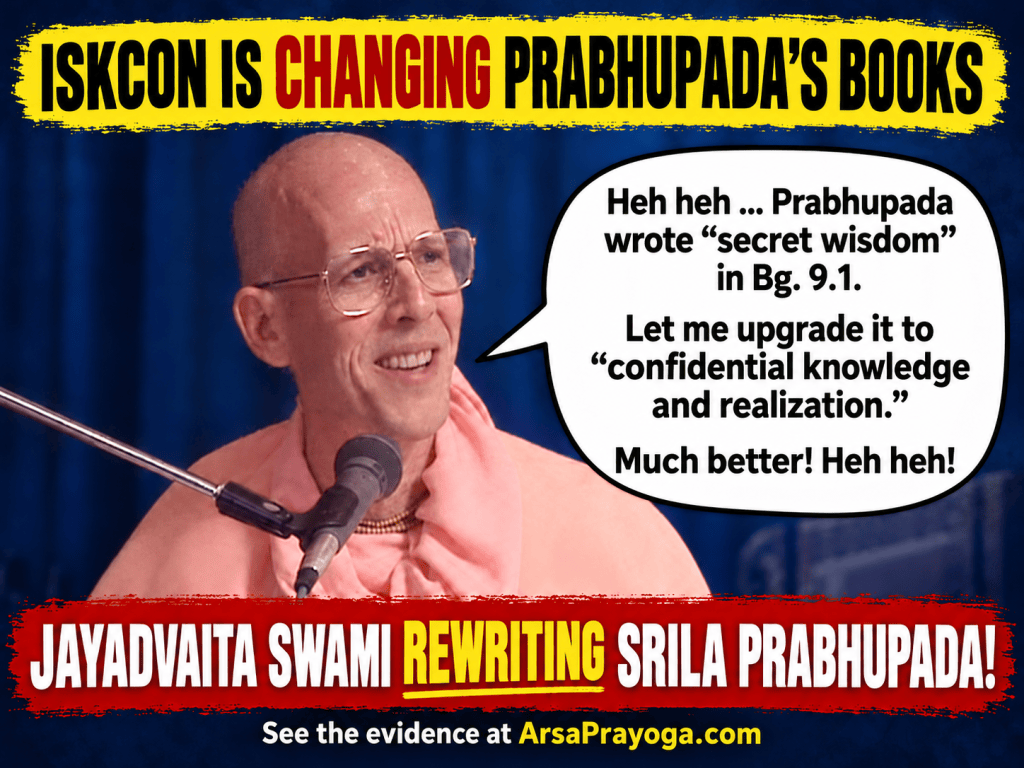
By Ajit Krishna Dasa
Link to the Original Article:
https://arsaprayoga.com/2014/03/29/secret-wisdom-deleted-from-bhagavad-gita-as-it-is-bg-9-1/
Description
This article examines a significant philosophical and devotional change introduced into Bhagavad-gītā As It Is 9.1 in the posthumously edited edition by Jayadvaita Swami and the BBTI. In the authorized 1972 edition—and in Srila Prabhupada’s original manuscript/dictation—the verse described the Gītā’s teachings as “this most secret wisdom.” In the revised edition, this was changed to “this most confidential knowledge and realization.” The result is not a restoration of fidelity but a step away from Srila Prabhupada’s intended expression—without any authorization, necessity, or justification.
Type of change
Substitution — replacement of a spiritually and philosophically loaded phrase.
Category
Philosophical/Devotional change.
Commentary
Replaces a deep theological term with a weakened alternative
“Secret wisdom” conveys the classical Vaiṣṇava understanding of revealed, esoteric truth: sacred, hidden, spiritually potent, and only bestowed upon those qualified by devotion and purity.
The substitution—“confidential knowledge and realization”—shifts that meaning toward intellectualism and personal experience. “Knowledge” is shared, “realization” is internal, and “confidential” sounds like something selective but not necessarily mystical or transformative.
The change flattens the metaphysical and devotional gravity of the verse.
This is a devotional change.
A devotional change is an alteration that affects the text’s devotional feeling, focus, or relationship to Krishna, even if the new wording looks technically correct. It shifts the mood, tone, or spiritual orientation—replacing revelation with instruction, grace with technique, or divine agency with human effort. The vocabulary may remain respectable, but the bhakti-current is weakened, redirected, or interrupted.
What makes this edit worse: “secret wisdom” was Prabhupada’s own language
Far from correcting an accidental edit or misplaced phrase, this change removes a term that was present in both the 1972 edition and Srila Prabhupada’s original manuscript.
In other words:
- Prabhupada dictated “secret wisdom.”
- Prabhupada approved its use in the printed edition.
- Jayadvaita Swami removed it after his physical departure.
This is not editing. This is altering Prabhupada’s own words.
Dismantles the revelatory mood of the Gītā
In the original, Krishna says:
“I shall impart to you this most secret wisdom…”
It is revelation, not merely instruction. Krishna is gifting hidden truth to His qualified devotee.
After the edit, that mood has shifted:
“I shall impart to you this most confidential knowledge and realization…”
Knowledge and realization are things acquired, not revealed. This flips the devotional dynamic from grace to effort, from mystery to methodology.
Violates Arsa-Prayoga—and common sense
Arsa-Prayoga exists to protect the words of the ācārya, even if those words appear imperfect by modern standards. When a disciple changes what the guru actually said—especially after his departure—it is an act of editorial presumption, not service.
There is no scope for removing what Srila Prabhupada originally wrote and approved. Yet Jayadvaita Swami did just that—while claiming to be “bringing us closer” to Srila Prabhupada.
The irony writes itself.
The real issue
The problem is not simply about words. It is about authority.
When a disciple removes a phrase the guru himself composed, approved, and published—what else is being removed?
How many more spiritual treasures are quietly erased in the name of editorial “improvement”?
That is why devotees committed to preserving Bhagavad-gītā As It Is reject such posthumous editing—not out of sentimentality, but out of fidelity. We are not here to correct Srila Prabhupada.
We are here to hear him.

