To Edit or Not To Edit – That Is The Question

Help us by “liking” and “sharing” this post!

By Govinda Dasi (ACBSP)

govinda-dasi-sp

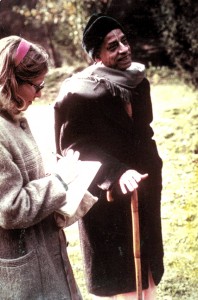
Govinda Dasi & Srila Prabhupada

The book editing issue is a very serious one, perhaps the most serious issue in ISKCON today. I have seen the attractive and seemingly authentic website promoting these changes, but most of it is propaganda, a lot of it based on speculation of what took place. It is most unfortunate that this has occurred, as it endangers everything Srila Prabhupada came to this world to do. He came from Krishna Loka “to write some books.”

So many times, Prabhupada said, referring to his books, “NO Changes!” “Don’t change anything!” but this instruction, given repeatedly, has been glossed over by so many elaborate, and often untruthful, explanations and excuses.

The very real danger is that his books could be lost in time, as some changes lead to more changes, and “tinkering” with editing is the disease of the American nature. Prabhupada complained of this “Westerner disease” often, and there is ample evidence that he did not want his books changed after he left this world.

Posthumous editing is not respected by the scholarly community (see Dr. John Trimble, famous for his Writing with Style) nor is it respected or approved of by the Gaudiya Vaishnava tradition. The opinions of such famous Western scholars as Dr. Trimble, and the opinions of famous Gaudiya scholars, have not been included in this BBT-edit website — because they are NOT favorable. So the reasoning for doing this massive edit is flawed, i.e. “to make the books more acceptable to scholars…”

Continue reading

Removing “eternal” from Bhagavad-gita As It Is (2.30)

This article was sent to the BBT International the 20th Oct. 2013. We asked them to comment on the points raised. So far we have not received any reply.

By Ajit Krishna Dasa

Bg 2.30 – original and authorized 1972-edition:

“O descendant of Bharata, he who dwells in the body is eternal and can never be slain. Therefore you need not grieve for any creature.”

Bg 2.30 – unauthorized 1983 BBT International edition:

“O descendant of Bharata, he who dwells in the body can never be slain. Therefore you need not grieve for any living being.”

Why has the word “eternal” been removed? What does Prabhupada say? Here are something from his lectures:

“O descendant of Bharata, he who dwells in the body is eternal and can never be slain. Therefore you need not grieve for any creature.”

Prabhupada: Dehi nityam avadhyo ‘yam dehe sarvasya bharata. Dehe, dehe means body, within the body. This topic began, dehino ‘smin yatha dehe kaumaram yauvanam jara. Deha, dehi. Dehi means one who possesses the body. Just like guni. Asthate in prata. The grammatical. Guna, in, deha, in, in prata. Dehin sabda. So the nominative case of dehin sabda is dehi. Dehi nityam, eternal. In so many ways, Krsna has explained. Nityam, eternal. Indestructible, immutable. It does not take birth, it does not die, it is always, constantly the same. Na hanyate hanyamane sarire. In this way, again he says nityam, eternal. (730831BG.LON)

Another lecture:

Devotee: 30: “O descendant of Bharata, he who dwells in the body is eternal and can never be slain. Therefore you need not grieve for any creature [Bg. 2.30].”

Prabhupada: Now, after putting forward all definitions and arguments from different angles of vision, of different philosophers, thesis, now Krsna concludes, “My dear Arjuna, take it for certain that the soul within is eternal.”

>>> Ref. VedaBase => Bhagavad-gita 2.27-38 — Los Angeles, December 11, 1968

Even in Srimad Bhagavatam Prabhupada writes that BG 2.30 confirm the eternality of the soul:

“The living entity is unborn and eternal, and as confirmed in the Bhagavad-gita (2.30),…”

>>> Ref. VedaBase => SB 2.7.49

Then why take “eternal” out the of the Bhagavad-gita As It Is?

BBTI attempts to give this justification:

“The words “is eternal” (First Edition) do not appear in Srila Prabhupada’s original manuscript. The word nityam here means “eternally” — or, as Srila Prabhupada gives it, “always.” It modifies avadhyah. Thus, “always unfit for being slain.” Putting that negatively, as the original editor chose to do, the “always” becomes “never” — “he can never be slain.”

>>> Ref. VedaBase => GRV: 2.31: “Editing varnasrama-dharma out of the books?

There a quite some problems with this proposed justification:

  • We do not know what Hayagriva Prabhu and Prabhupada agreed upon while carefully working together on the Bhagavad-gita. Prabhupada might have wanted the word “eternal” to be there. We do not know and therefore we can’t change anything. Why? Because we can’t change in Prabhupada’s books based on “maybe”, “perhaps”, “I think” etc.) This “principle of caution” ought to implemented in ALL editing work.
  • Prabhupada himself used the word “nityam” in lectures and said that meant that the soul is eternal. In one of the above lectures Prabhupada even says that “Krsna concludes, “My dear Arjuna, take it for certain that the soul within is eternal.” So Krishna says in BG 2.30 that the soul is eternal. But BBT International thinks otherwise and overrides Prabhupada’s own words and corrects his sanskrit. Prabhupada was very concerned with better knowing disciples that had become “learned” in sanskrit:

“…a little learning is dangerous, especially for the Westerners. I am practically seeing that as soon as they begin to learn a little Sanskrit immediately they feel that they have become more than their guru and then the policy is kill guru and be killed himself.” (from a letter to Dixit das on 18 Sep 1976)

  • The result of these changes and their proposed justification will make it seem – for new devotees and scholars – that Prabhupada’s sanskrit was not good enough. Imagine that a new bhakta or bhaktin heard or read one of the above lectures by Prabhupada were he says that nityam in BG 2.30 means the soul is eternal. And then the new bhakta or bhaktin later reads that this is actually not correct sanskrit, and now the BBT International has corrected it by removing it from the translation. What kind of impression will this new bhakta or bhaktin get of Prabhupada and his knowledge of sanskrit? Will it increase their respect for him? Of course not! What will it say about the way we honor the acaryas in our sampradaya? Is this arsa-prayoga – to respect the authoritative sages?
Debate with Kancana-valli Devi Dasi on the book changes

This debate was posted on the Sampradaya Sun Dec. 15 2012 : http://www.harekrsna.com/sun/editorials/12-12/editorials9486.htm

Exchange with the BBT’s Kancana-valli dd

BY: SUN STAFF

Dec 15, 2012 — CANADA (SUN) — Following is a recent exchange between Ajit Krishna dasa and the BBT’s Kancana-valli devi dasi regarding changes to Srila Prabhupada’s books. The thread of discussion began with this inquiry from Ajit Krishna dasa on November 25, 2012:

Continue reading

“Rascal Editors”

This is a key conversation in relation to the editing and publishing of Prabhupada’s books. Many points from it have been debated, and many future posts on this blog will no doubt refer and discuss points from it. So here we bring the complete conversation as a reference.

Prabhupada: Where are others?
Tamala Krsna: Shall I get other people? Satadhanya Maharaja? (long pause)
Prabhupada: That… Find this verse, munayah sadhu prsto ‘ham… [SB 1.2.5].
Tamala Krsna: There’s no index. It’s not a new Bhagavatam. There’s no index in this Bhagavatam. Munayah sadhu…? “The Effects of Kali-yuga” chapter? Is that the verse, about the effects of Kali-yuga? No. (background talking, looking for verse)
munayah sadhu prsto ‘ham
bhavadbhir loka-mangalam
yat krtah krsna-samprasno
yenatma suprasidati
[SB 1.2.5]
“munayah — of the sages; sadhu — this is relevant; prstah — questioned; aham…”
Prabhupada: No? What is that? Sadhu? What is that? Munayah?
Tamala Krsna: Says, “sadhu — this is relevant.”
Prabhupada: Relevant?
Tamala Krsna: That’s what it’s translated as, “this is relevant.” May be a mistake.
Devotee (1): It’s a mistake.
Prabhupada: Munayah?
Tamala Krsna: “Munayah — of the sages; sadhu — this is relevant…”
Prabhupada: The nonsense, they are… They are correcting my trans… Rascal. Who has done this? Munayah is addressing all these munis. Continue reading

Jayadvaita Swami admits there is no authorization

Vyapaka Dasa: “Do you have explicit instructions from Srila Prabhupada authorizing you to make post-samadhi changes to his books?”
Jayadvaita Swami: “No.” (Published e-mail correspondence between Jayadvaita Swami og Vyapaka Dasa)

Govinda Dasi: “…Jayadvaita Maharaja has said that Srila Prabhupada did not specifically give him the permission to…”
Jayadvaita Swami: “I never got an explicit word from Srila Prabhupada to do this work at an explicit time.” (Conversation between Govinda Dasi and Jayadvaita Swami about the posthumous changes to Prabhupada’s Bhagavad-gita, Honolulu on Jan 19, 2003)

“To my knowledge, Srila Prabhupada never asked us to re-edit the book.” (Jayadvaita Swami’s Letter to Amogha Lila 1986)

“Dear Yasodanandana Prabhu,

Please accept my humble obeisances. All glories to Srila Prabhupada!

In answer to your questions, I don’t have any original tape recording of any kind of Srila Prabhupada authorizing the editorial changes in the Gita. And despite scouring the GBC resolutions from 1979-83, I found no reference to the Bhagavad-gita whatsover. It seems the assignment of Jayadvaita Swami to perform that task was unpublished–at least I couldn’t find it in the GBC resolutions made widely available.

Hoping this meets you well, I remain

Your servant,
Dravida dasa [Editor for the BBT(I)]” (Letter from Dravida Dasa to Yasodanandana Dasa, Date: Wed, 24 Apr 1996 09:45:12 -0700)

So both Jayadvaita Swami and Dravida Dasa, who are the leading editors for the BBT International admit there is no instruction from Prabhupada to edit his Bhagavad-gita As It Is (or any other of his books).