
Click to enlarge the picture.
Download as PDF here:
change-to-bg-table-9.1.

“As long as the BBTI do not make philosophical changes, then their changes are all okay!”
Dear Jaya Krsna Prabhu! Dandavat pranam! Jaya Srila Prabhupada!
Our previous chat was very messy and unstructured. It was not possible for either of us to present our arguments and points in an orderly way. Therefore let us now start a debate where we focus on some concrete points. I suggest we start with your above request:
Jaya Krsna Dasa (JKD):
“Whenever possible, please share any verse you found which is philosophically completely against what Srila Prabhupada taught because of this change. I mean only philosophical changes only, not any other type of changes”
Now, there are a few significant things about this request of yours. It has an implied premise, namely that:
“All changes that are not of a philosophical nature are okay.”
The truth of this implied premise can be disproved by quoting Jayadvaita Swami and the BBTI:
“As you know, and as we kept in mind while doing the work, Srila Prabhupada staunchly opposed needless changes.” (Jayadvaita Swami, Letter to Amogha Lila, 1986)
Now, as we see Prabhupada did not did not only disapprove of philosophical changes to his books. He also disapproved of “needless changes”. Therefore, if we can find any needless changes in his books, we know that Jayadvaita Swami and the BBTI have done something wrong. My contention is that Jayadvaita Swami and the BBTI have made many needless changes. Too many.
Here is one example:
“And the covers, if possible, should always be the same for each respective book regardless of what language it may be printed in.” (Letter to Jadurani, Bombay, January 3, 1975)
So why have the BBTI changed the covers of many of the books? This seems to be completely needless. Prabhupada loved the original cover. It was very special. It was popular. It made devotees. Why change it? We have asked the BBTI and Jayadvaita Swami why the cover was changed. But we have not received any reply.
Maybe you can answer this question, dear Jaya Krsna Dasa Prabhu?
Read more about the changes to the covers here:
And here:
https://arsaprayoga.com/2013/12/24/prabhupadas-instructions-on-front-covers-not-honered/
So now I have:
1. Argued against your implied premise, and therefore against the validity of your question.
2. Presented positive evidence that the changes of the covers are against Srila Prabhupada’s instructions.
Now you have to:
1. Defend your implied premise, or admit that your question is invalid.
2. Argue against my points about the covers, or admit that you either cannot answer it, or that it is in fact against Srila Prabhupada’s instructions to change them.
3. Possibly present further points on the matter of the book changes.
—
Ajit Krishna Dasa
Changing of Srila Prabhupada’s Transcripts (from Sampradaya Sun)
BY: KRISHNA DASA
Jun 03, 2014 — USA (SUN) — It is one thing to edit a book posthumously, but what seems more egregious is the editing of a transcript of a conversation. Such editing is found in the book Journey of Self Discovery, supposedly by A.C. Bhaktivedanta Swami, which was first published in 1990 as we see from a search of the U.S. Copyright records.
That book includes a conversation between Srila Prabhupada and a Dr. S. P. Oliver, Rector of the University of Durban, in Westville, South Africa, on October 10, 1975. The book is available online through http://www.prabhupadabooks.com and the relevant page can be seen here or in the e-book on page 23, where we see that during the conversation, Srila Prabhupada asks a devotee to read some verses and purports from the Bhagavad-gita As It Is.
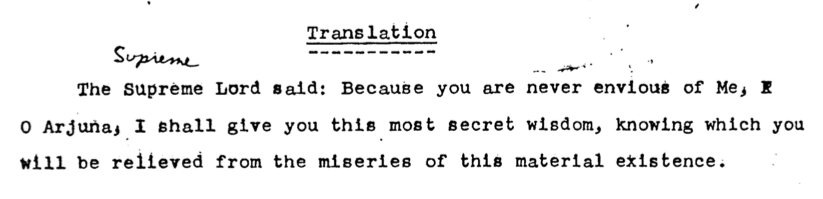
Then we see that the transcript uses totally text from the version of the Bhagavad-Gita As It Is that was edited and published after the departure of Srila Prabhupada. For example, during that conversation a devotee supposedly was reading the verse and purport to Bg 4.34. We can see the 1972 version and the later “Revised and Enlarged” version side by side.
It is not possible that a devotee with Srila Prabhupada in 1975 was able to read the version of the Bhagavad-gita that did not exist until the 1980s.
—

This conversation took place in 1975, and the verse quoted was from the 1972 editionof Bhagavad-gita As It Is. But here we find that the verse has been changed by the BBTI to fit the 1983 edition.
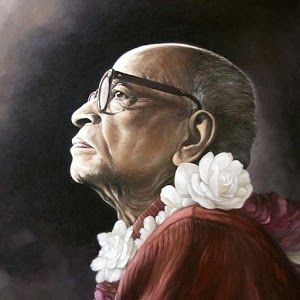
BY: BHAKTA TORBEN (From Sampradaya Sun)
Apr 18, 2014 — DENMARK (SUN) — The common arguments from the so-called BBT, “BBTI”:
“And in the conversation where Srila Prabhupada complained so strongly about “rascals editors,” Srila Prabhupada said about Jayadvaita, “He is good.”
“Of course, regarding Jayadvaita Swami, the BBT’s chief editor, Srila Prabhupada wrote, “Concerning the editing of Jayadvaita Prabhu, whatever he does is approved by me. I have confidence in him.” (letter to Radhavallabha, 7 September 1976)
(From BBT International’s website)
NOW LISTEN PLEASE:
Prabhupada: I have given you charge of this BBT, millions of dollars you are dealing, but it is not for your misuse. As soon as you misuse, that is your responsibility.
Ramesvara: Yes, but he says but still, you’ll know that I’m going to misuse it.
Prabhupada: No. That Krsna knows, when something charge is given. But because you are independent, I know that “Ramesvara is very good boy; let him be in charge.” But you can misuse at any moment, because you have got independence. You can misuse at any moment. At that time your position is different.
>>> Ref. VedaBase => Morning Walk — June 3, 1976, Los Angeles
(Morning Walk — June 3, 1976, Los Angeles)
This very important snippet is from a missing audio exchange, from a not properly (actually cutout) transcribed morning walk conversation. (That´s another issue in itself).
So the conclusion MUST be that the above two arguments for the continued post-samadhi editing of Jayadvaita Swami & Co. are CONDITIONAL. They are NOT absolute green lights from Srila Prabhupada to Jayadvaita Maharaj, at all.
ys. Bhakta Torben, Denmark.
On BBT International’s website we find this video:
Direct link: https://www.youtube.com/watch?v=IlqbnzzL_28
In the video Jayadvaita Swami says:
”I went back and re-edited especially the translations in the first canto. Especially the first perhaps three chapters where I thought their were a lot of short comings. And I typed up all the translations – after I finished all the work, I typed up all the translations in one manuscript and put them in an envelope, and Prabhupada was coming to New York where I was at the time. Prabhupada came, and I put all the translations in an envelope, and I wrote a cover letter explaning what I have done, and asking him whether it was okay. And then I brought it up to Prabhupada’s quarters at 55th Street in New York–the New York temple—with the idea that I would leave them with his secretary and come back later. But Prabhupada was right there, and so he…I offered obeisances, and he had me, you know: ”What do you do in here?” ”What have you come for?” Not in those words, but, you know, he inquired was I was doing. And I explained that I had come to deliver this. So Prabhupada had me start reading right in his presence. And I began, I read the first verse, the second verse, the third verse. I went through a few verses, and Prabhupada stopped me. Prabhupada was listening very carefully, he stopped me. ”So what you have done?” And I said: ”Well, Srila Prabhupada, I have edited to try to bring it closer to what you originally said.” Prabhupada said: ”What I have said?” I said: ”Yes, Srila Prabhupada!” Then Prabhupada: ”Then it is alright!”, and that was it. ”Then it is alright!” ”What I have said?”, ”Then it is alright!”
A few points about this story:
1. Jayadvaita Swami’s story is merely anecdotal evidence which is considered a rather unreliable and dubious support of a claim. No one is really able to investigate the truth value of his story. To use anecdotal evidence as the foundation for changing the books that are supposed to guide mankind the next ten thousands years will surely create doubt about the authority of the changed books.
As Srila Prabhupada said about such stories:
“Just like in our ISKCON there are so many false things: “Prabhupada said this, Prabhupada said that.””
(Srila Prabhupada Letter, 7/11/1972)
“They misunderstand me. Unless it is there from me in writing, there are so many things that “Prabhupada said.”” (Srila Prabhupada Letter, 2/9/1975)
And as Jayadvaita Swami says:
“If Srila Prabhupada didn’t clearly and definitely say it, and if it first came up after 1977 whatever it is, don’t trust it. Rule of Thumb.” (Diksa-Diksa, Where the Rtvik People are Wrong, p. 85, Jayadvaita Swami)
Jayadvaita Swami started circulating his story after the book changing controversy started, and there is no evidence to support that it is true. Therefore, “…don’t trust it. Rule of Thumb.”

2. Jayadvaita Swami seems to conclude that since Prabhupada approved the verses that he brought him, then he also approved that he could change all his books using the same method – even after his disappearance. But this is an unwarranted extrapolation, because Jayadvaita Swami extrapolate far beyond the range of available data, namely from one single instance of editing to more or less all future instances of editing. But from his story no justification for such an extrapolation can be found. The only conclusion to be deduced (if the anecdote is at all true) is that what Jayadvaita Swami did to the very specific verses he brought Prabhupada was okay. No more, no less.
3. If Jayadvaita Swami’s anecdote is true, then Prabhupada told him that if he had made the text closer to what Prabhupada originally said, then it was okay.
However, in my previous articles to Jayadvaita Swami I have referred to articles where it is clearly documented that he has:
The article ”The Duty of the Finger” demonstrates all these types of changes made to Prabhupada’s Bhagavad-gita As It Is:
Now, I think most devotees around the world would like to know what Jayadvaita Swami thinks Prabhupada would have said if he had told him:
”Well, Srila Prabhupada, in my editing I have deleted some of your own chosen words and sentences! And I have also invented some completely new words and sentences and put them in where I felt they would do a good job! And since we at the BBT International are now ”accomplished sanskrit scholars” we have gone through some of your own typewritten sanskrit translations and changed them also.”
What do we, honestly, think Prabhupada would have answered? Then try to extrapolate that answer to the changes Jayadvaita Swami has made to Prabhupada’s Bhagavad-gita As It Is.
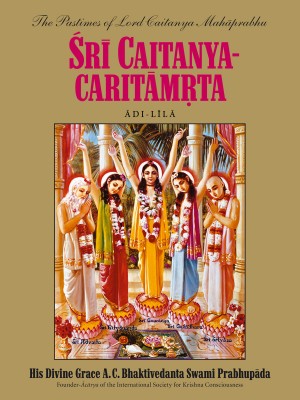
Caitanya Mahaprabhu said:
“Even in the poetic compositions of such great poets as Bhavabhuti, Jayadeva and Kalidasa there are many examples of faults. Such mistakes should be considered negligible. One should see only how such poets have displayed their poetic power.” (Caitanya Caritamrta, Adi-Lila, Ch. 16, Texts 101-102)
Prabhupada’s purport to text 102:
In Srimad-Bhagavatam (1.5.11) it is said:
tad-vag-visargo janatagha-viplavo
yasmin prati-slokam abaddhavaty api
namany anantasya yaso ‘nkitani yat
srnvanti gayanti grnanti sadhavah
“In explaining the glories of the Lord, inexperienced men may compose poetry with many faults, but because it contains glorification of the Lord, great personalities read it, hear it and chant it.” Despite its minute literary discrepancies, one must study poetry on the merit of its subject matter. According to Vaisnava philosophy, any literature that glorifies the Lord, whether properly written or not, is first class. There need be no other considerations. The poetic compositions of Bhavabhuti, or Srikantha, include Malati-madhava, Uttara-carita, Vira-carita and many other similar Sanskrit dramas. This great poet was born during the time of Bhojaraja as the son of Nilakantha, a brahmana. Kalidasa flourished during the time of Maharaja Vikramaditya, and he became the state poet. He composed some thirty or forty Sanskrit dramas, including Kumara-sambhava, Abhijnana-sakuntala and Megha-duta. His drama Raghu-vamsa is especially famous. We have already described Jayadeva in Chapter Thirteen of this Adi-lila.



 Arsa-Prayoga
You must be logged in to post a comment.