Jayadvaita Swami admits: There is no one original manuscript

Help us by “liking” and “sharing” this post!

Excerpts regarding the so called “original manuscript” from an article by Govinda Dasi
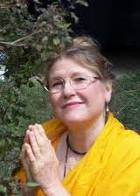
govinda-dasiGovinda Dasi

“It is unreasonable to consider that Srila Prabhupada would intend to give up the results of two years of editing the book with Hayagriva and go backwards to the original manuscripts.”

“Jayadvaita Maharaja says that he changed the Bhagavad-gita to be more in keeping with the original manuscript.’ I question which manuscript, since nearly two years of editing by Srila Prabhupada and Hayagriva had already taken place before Jayadvaita even joined the movement. There certainly were many working drafts and manuscripts in various stages of editing, since Srila Prabhupada spent many hours, weeks and months going over every detail of every single verse of the Gita with Hayagriva. Jayadvaita Maharaja confirmed this in the second Hawaii istagosthi meeting: there is no one original manuscript.’

A writer usually prepares several working drafts before the final draft is polished and sent to press. For example, I made several drafts of this letter, correcting spelling, grammar and style. The first drafts are in my trash bin. I am signing this, the final draft, for publication. If someone took an earlier draft out of my trash bin and published it, I would be greatly annoyed. Similarly, Srila Prabhupada’s signature is on the final draft of the complete Bhagavad-gita As It Is (completed in 1968 but not published until 1972), not on any so-called original manuscripts’ Jayadvaita Maharaja may possess. To assume that Srila Prabhupada was not watching over and scrutinizing this whole process is absurd. His books were most important to him. He knew both internally and externally what was going into his books, and he signed and sealed the work when it was completed to his satisfaction and ready to go to press.”

“Certainly, the few typos that slipped through needed Srila Prabhupada’s correction, but the scope of alterations in Jayadvaita Maharaja’s edited version is far broader. Jayadvaita Maharaja’s version of Srila Prabhupada’s Bhagavad-gita doesn’t just correct typos; it also succeeds in changing Srila Prabhupada’s mood, style and often, his meaning. Indeed, after Srila Prabhupada’s departure, the original Bhagavad-gita was rewritten to suit the taste of the editors, on the plea that it is closer to – in Jayadvaita Maharaja’s opinion – the original manuscript.’ But Jayadvaita Maharaja stated in the second book changes meeting in Hawaii that there were many original manuscripts’ of varying quality and content. There is no one original manuscript.’

In this case, any changes are really unreasonable, when you consider that Srila Prabhupada had the original manuscripts in hand, but chose to sign off on the edited version. Why didn’t he just choose to print one of those manuscripts? Why did he, instead, spend hundreds of hours with Hayagriva, editing his manuscript to flow beautifully in the English language? Moreover, why would Srila Prabhupada sign it and gift it to the world, if he intended that future editors would dig up some so-called original manuscripts’ and try to change it back to the original.’ It is unreasonable to consider that Srila Prabhupada would intend to give up the results of two years of editing the book with Hayagriva and go backwards to the original manuscripts.’”

“When Jayadvaita Maharaja presents his rationale for editing Srila Prabhupada ‘s Bhagavad-gita As It Is to the public, he quotes a few passages from Bhagavad-gita As It Is that are obviously confusing, and claims, “these need to be changed.” For example, he cites “planet of the trees” [Bg. 1972 edition 10.24 P] and “cattle raising” [Bg. 1972 edition 18.44 T]. He uses these isolated examples to justify his wholesale rewriting of the entire Gita. Perhaps no one would object if Jayadvaita Maharaja had noted those few changes authorized by Srila Prabhupada in footnotes or an addendum, instead of making sweeping, unauthorized editorial changes to virtually the entire book. If he feels there are confusing aspects, or as he himself is fond of putting it, “goofs” in Srila Prabhupada’s Bhagavad-gita As It Is, then these portions can be selected and clarified in a published addendum or series of footnotes without changing the meaning of any other part of the book.”

“Jayadvaita Maharaja has rewritten the whole book according to some manuscripts that he believes to be the original – and which Srila Prabhupada did not choose to print. Rather, in both 1968 and 1972 Srila Prabhupada chose to print the edited version, not a manuscript.

The overriding fact is that Srila Prabhupada never told Jayadvaita Maharaja or anyone else to edit his books after he left. I repeat, Srila Prabhupada never gave Jayadvaita Maharaja or anybody authority to edit or change his books after his departure. Instead, he said, “Print the books the original way.” By late 1976, he was acutely aware of the American disease’ of compulsively changing things, so he chose the safest route to protect his books: “NO CHANGES.””

In The Early Days (Govinda Dasi)

Help us by “liking” and “sharing” this post!

govinda-dasi

Govinda Dasi

A number of devotees attended the recent (January 2003) series of meetings in Hawaii on the book changes. Jayadvaita Maharaja attended the first two meetings, and Nischintya Prabhu attended the third one (Jayadvaita Maharaja was out of town). I attended all three meetings and believe that much was accomplished. Many valuable points were gleaned from these sessions – both inspiring as well as grueling. These meetings are being transcribed, and are available on adi-vani.org for those who are interested.

We held the meetings in Srila Prabhupada’s room at New Navadvipa Dham, His Divine Grace A.C. Bhaktivedanta Swami Prabhupada Memorial Tirtha (the Honolulu ISKCON temple), where Srila Prabhupada lived, worked and translated his books. His presence is very strong at our Hawaii temple. We all prayed for Srila Prabhupada’s divine presence at these meetings, and humbly requested that he inspire us to reach understandings based on his transcendental viewpoints, rather than our own limited ones. In my heart, I feel that Srila Prabhupada has urged me to speak out on this issue. I usually do not get involved in controversial matters unless the issue is of great importance. And the issue of Srila Prabhupada’s books, in my opinion, is of paramount importance. I have had many realizations and wish to share them here.

It is unreasonable to consider that Srila Prabhupada would intend to give up the results of two years of editing the book with Hayagriva and go backwards to the original manuscripts.

First, it seems that Jayadvaita Maharaja takes this matter too personally.

Continue reading

Govinda Dasi replies: the REAL ISSUE regarding the book changes

Help us by “liking” and “sharing” this post!

What follows is Govinda Dasi’s reply to the exchange between Brahmananda Prabhu and myself.

govinda-dasi

Dear Prabhus,

Please accept my humble obeisances. You have many good points; however, in order to come to agreement, the essential issue should be addressed here.

There will always be those who favor the posthumously edited edition, and there will always be those who favor the earlier edition that was read by Srila Prabhupada in classes, and in his lectures all over the world. Therefore, many people will present this perspective or that perspective, saying such things as “Rayarama was the best editor,” or “Hayagriva was the best editor, or “Jayadvaita Swami was the best editor,” and so on and on.

But this is NOT THE REAL ISSUE AT ALL.

THE REAL ISSUE IS the correct manner of posthumous editing–if it is to be done at all. Many people feel there should be NO posthumous editing. And many people believe there SHOULD BE posthumous editing to “correct various typos and grammatical problems.”

AGAIN, THIS ALSO IS NOT THE REAL ISSUE.

THE REAL ISSUE IS THAT IF INDEED THERE IS TO BE POSTHUMOUS EDITING, IT MUST BE DONE CORRECTLY, ACCORDING TO THE ACCEPTED PROTOCOL THAT IS ALREADY ESTABLISHED IN THE WORLD OF PUBLISHING.

Otherwise, Srila Prabhupada’s books are not considered to be authentic renditions of his writings, and are no longer acceptable to scholars. There are certain requirements for posthumous editing. These must be met.

And the BBT HAS NOT met those requirements in their posthumous editions.

The posthumously edition (editions) have not been correctly labeled according to the rules of publication. It is essential that any and all posthumous editions be dated and numbered, and that the editor (editors) names be prominently displayed on the cover and/or title page. There are other elements of proper protocol as well, and these can be easily accessed.

If everyone can come to understand this most essential point, there will be no conflict. Both editions can exist simultaneously, along with any and all future editions that may be done.

But they must be properly tagged with the editor’s name, date of the edition, and number of the edition, in order to gain any respect or credibility in the academic world. This is the accepted procedure which also clearly defines what material was printed during an author’s lifetime, and whatever was printed after his demise.

We cannot change these protocol according to our whims, or our preferences for this edition or that edition. To do so simply invalidates Srila Prabhupada’s books, and means they can be changed whimsically in the future. This puts his writings at risk for becoming like the edited Biblical texts–no one really knows which edition is which, or what the original one even says.

This matter can be settled once and for all, by having all posthumous editions follow the accepted protocol. Once this is done, there will no longer be any contentious issues. The edition that was printed during Srila Prabhupada’s lifetime will clearly be the original edition, and those editions that have been printed since his demise will be properly numbered and dated, and their various editors names will appear on the cover and/or title page.

Once this is done, people can choose the edition they prefer, and there will be no grounds for criticism. There will be no accusations of shabby, unprofessional presentations (as have been made by scholars) and no deceptiveness in the matter of book reviews written for the earlier edition. This correction will establish Srila Prabhupada’s books once again in the collegiate community, as they will honor the system used by scholars everywhere.

This is what needs to be corrected, once and for all.

Thank you for your time and efforts in this all important matter.

Your servant and sister,

Govinda dasi

Not back to “the original manuscript” (BG 13.3)

Help us by “liking” and “sharing” this post!

This article was sent to the BBT International the 15th Oct. 2013. We asked them to comment on the points raised. So far we have not received any reply.

Bhagavad-gita As It Is (13.3)

The original manuscript:

bg-original-manuscript-13.3

The authorized and approved 1972 edition:

bg-original-1972-13.3

The translation from the 1972 edition was approved by Prabhupada, and we see how it follows the draft (the so called original manuscript) very nicely. But then something strange happens in the BBT International’s 1983 edition:

The BBT International’s 1983 edition:

bg-1983-edition-13.3

We can see that the BBT International have changed the word “owner” to “knower” in the second line. Why? Searching the BBT International’s website and the internet we have found no information on why this change was made.

Questions to the BBT International:

Before you changed Prabhupada’s Bhagavad-gita As It Is verse 13.3…

  • Did you know that Prabhupada approved the galley proofs / the blueprint of the Bhagavad-gita As It Is, and according to Brahmananda Das (at that time swami) Prabhupada read the complete galley proofs before approving them to be sent to MacMillan to be used for printing what became the original and authorized 1972 edition of Bhagavad-gita As It Is?
  • Did you know that Prabhupada lectured many times on BG 13.3, and that he did not object to the word “owner” in the translation? Did you know he actually reconfirmed the word “owner” by using it in these lectures?

Pusta Krsna:

ksetra-jnam capi mam viddhi
sarva-ksetresu bharata
ksetra-ksetrajnayor jnanam
yat taj jnanam matam mama

Translation: “O scion of Bharata, you should understand that I am also the knower in all bodies, and to understand this body and its owner is called knowledge. That is My opinion.”

Prabhupada: That is greatness. This is the distinction. God is great. I know about my body, you know about your body, but God knows about your body and my body and his body and every… That is greatness. (Evening Darsana — July 6, 1976, Washington, D.C.)

Hari-sauri:

ksetra-jnam capi mam viddhi
sarva-ksetresu bharata
ksetra-ksetrajnayor jnanam
yat taj jnanam matam mama
[Bg. 13.3]

Prabhupada: Ksetra-ksetrajnayor jnanam yat taj jnanam matam mama. English?

Hari-sauri: “O scion of Bharata, you should understand that I am also the knower in all bodies, and to understand this body and its owner is called knowledge. That is My opinion.”

Prabhupada: First of all knowledge means ksetra-ksetrajna. The body is the field of activity. You are acting, I am also acting, everyone is acting — according to the body. But the actor is called ksetrajna. Just like a cultivator is tilling the land, his own, and the tiller is cultivator. Similarly, this body is an analogy of this field, and we are tilling. So Krsna says that “I am also one of the tillers.” Just like the tenant and the landlord. In an apartment house, the tenant is occupier of a certain house, certain apartment, but the landlord is the owner of the whole house. So God says “I am also ksetrajna — but for all the buildings.” Everything that is there, all planets, all, everywhere. That is His all-pervasiveness. I am the proprietor of this body, owner of this body, but God is proprietor of all the bodies. In this way that is explained.” (Room Conversation with George Gullen, President of Wayne State University — June 15, 1976, Detroit)

“So people are taking this, that “I am this body.” That is ignorance. If they know, if one knows that “I am not this body; I am proprietor of this body, I’ll have to work with this body for my future,” then that is knowledge. Etad yo vetti ksetra-jna, knower, one who knows. That is the beginning of knowledge. Then Krsna says,

ksetra-jnam capi mam viddhi
sarva-ksetresu bharata
ksetra-ksetra-jnayor jnanam
yat taj jnanam matam mama
[Bg. 13.3]

Krsna is giving His opinion, the Supreme Authority, that “If you want to know, if you want to be in knowledge, this is knowledge.” What is that? “That this body, you are not this body; you are the owner of the body. And you should know also that the there is another person. As you are a person, you are owner of this body, there is another person.” Who is that? “That is I am.” Krsna says. Ksetra-jnam capi mam viddhi: “I am also owner of this body.” Actually Krsna is the owner of the body. Just like in a, in an apartment, there is the occupier and the landlord…Similarly, Krsna is the real owner of this body because Krsna has given me this body just to occupy it and work. So far. Not that I am the actual proprietor of this body.” (As the body is our field for cultivating Krsna conscious ness, so the land is our field for cultivating food…Vedic civilization means every man should produce his own food. More precise reference to be added soon)

Devotee: “O scion of Bharata, you should also understand that I am also the knower in all bodies and to understand this body and its owner is called knowledge. That is my opinion.”

Prabhupada: So Arjuna inquired from Krsna six things: ksetra, ksetrajna, prakrti, purusa, jnanam, jneyam. What is knowledge and what is the object of knowledge. (Bhagavad-gita 13.3 — Paris, August 11, 1973)

Nitai: Translation: “O scion of Bharata, you should understand that I am also the knower in all bodies, and to understand this body and its owner is called knowledge. That is My opinion.”

Prabhupada:

ksetra-jnam capi mam viddhi
sarva-ksetresu bharata
ksetra-ksetra-jnayor jnanam
yat taj jnanam matam mama
[Bg. 13.3]

Jnanam, knowledge. The Supreme Personality of Godhead Krsna is explaining about knowledge. People are being educated all over the world for advancement of knowledge. Knowledge is meant for the human being, not for the cats and dogs. Therefore, for human being, there are so many universities, schools, colleges, institutions, laws. There are so many things (indistinct) to advance knowledge is to understand “Who am I?” If I do not know who am I, then what is the meaning of my advancement of knowledge? Generally, despite so many universities all over the world, people are going on in the concept of this body, “I am this body.” “I am Indian,” “I am American,” “I am Hindu,” “I am Muslim.” So everyone is identifying himself with this material body. Then where is the advancement of knowledge? Here Krsna says, ksetra-ksetra-jnayor jnanam yad jnanam, taj jnanam matam mama. The ksetra, this body, and the owner of the body… I am not this body, I am the owner of this body. This is jnanam. (Bhagavad-gita 13.3 — Hyderabad, April 19, 1974)

  • Did you know that Prabhupada used the words “knower”, “owner”, “occupier” and “proprietor” many times for both the soul and Krishna? And many times when referring specifically to BG 13.3? And did you know that Prabhupada often translated ksetra-jna as both the “knower of the body”, “owner of the body”, “possessor of the body” and “proprietor of the body”?

“But there is another living being. He is supreme living being, Krsna. He says that “I know everything of everyone’s body.” Ksetra-jnam capi mam viddhi sarva-ksetresu bharata [Bg. 13.3]. This is the verse. Ksetra-jna means the knower of the body. You are individual knower of your body; I am knower individually of my body.” (Lecture at Boys’ School — Sydney, May 12, 1971)

“In Bhagavad-gita it is said, ksetra-jnam capi mam viddhi sarva-ksetresu bharata [Bg. 13.3]. Everything is there. The ksetra-jna means the possessor of this ksetra, body, the owner or occupier.” (Bhagavad-gita 7.3 — London, March 11, 1975)

The ksetra jna, the owner of the body, is also called the khaga, the living entity. Within the body there are two such ksetra jnas — the individual soul and the Supersoul. The individual soul is the owner of his individual body, but the Supersoul is present within the bodies of all living entities.” (SB 10.2.27)

“In another place, Krsna says this dehi or ksetra-jna, the owner of the body is there, and there is another ksetra-jna, another owner. That is Krsna. Ksetra-jnam capi mam viddhi sarva-ksetresu bharata [Bg. 13.3]. As the individual soul is there within the body, similarly, the Supersoul, Krsna, is also there.” (Bhagavad-gita 2.30 — London, August 31, 1973)

“In another place also Krsna says ksetra-jnam capi mam viddhi sarva-ksetresu bharata [Bg. 13.3]. The question of the ksetra-jna, the owner of the body and the body. In this Chapter, in the Thirteenth Chapter, it is discussed. So in that chapter Krsna says that “I am also one of the owner of the body,…”” (Bhagavad-gita 9.3 — Toronto, June 20, 1976)

“In the Bhagavad-gita Krsna says, ksetrah ksetra-jnah. Ksetra-jnam capi mam viddhi sarva-ksetresu bharata [Bg. 13.3]. Ksetra-jna means the proprietor of the ksetra, this body. Body is called ksetra. So I am proprietor.” (Srimad-Bhagavatam 3.25.4 — Bombay, November 4, 1974)

(For more references please search the Vedabase/folio for these key words in relation to BG. 13.3. There are too many examples to include them all here).

The BBT International can’t justify this change from “owner” to “knower” in BG 13.3 by referring to the so called original manuscript, Prabhupada’s desires, to faulty sanskrit translation, to meaning, to spelling or to grammar.

Then how will they justify it?

Jayadvaita Swami: Is He on the Mental Platform?

Help us by “liking” and “sharing” this post!

By B. RADHA-GOVINDA (originally posted on the Sampradaya Sun)

Back-To-Godhead-Jayadvaita-Swami

Mental platform refers to one’s acceptance and (later) rejection (sankalpa/vikalpa), of the same thing based on the likes and dislikes of the mind, resultant from false ego. This mental platform based acceptance and rejection is symptomatic of conditioned souls, not the pure devotee.

The uttama adhikari pure devotee knows the sastras which are a direct manifestation of Krsna’s expressed words, expressed either directly from Krsna or His incarnations, or from those pure empowered devotees to whom Krsna has given realization of His words/instructions, Krsna’s using such pure devotees as His instrument to convey their realized (“Krsnized”) words and/or their prayers of glorification expressed through sastra.

Regarding Jayadvaita Swami and the question, “Is he on the mental platform?”, my question comes because not only does Jayadvaita Swami change certain things in Srila Prabhupada’s books, but he makes changes to the changes he (JAS) has himself already made.

To give one example, over the years I saw a few different changed versions of Bhagavad-gita As It Is (Was), and there were different “renditions” to the BG 2.1 verse, although Srila Prabhupada’s translation was already so clear and beautifully expressed that the reader has a very vivid, heartfelt understanding of Arjuna’s feelings from the verse, which read:

“Sanjaya said: ‘Seeing Arjuna full of compassion and very sorrowful, his eyes brimming with tears, Madhusudana, Krsna, spoke the following words’.”

Despite the (pre-1978) word for word translation, krpaya – ‘by compassion’, avistam – ‘overwhelmed’, asru-purna – ‘full of tears”; akula – depressed’; iksanam – ‘eyes’; visidantam- ‘lamenting’, one of Jayadvaita Swami’s edited (slaughtered) renditions of this verse read, “Sanjaya said: ‘Seeing Arjuna his mind depressed, Madhusudana, Krsna, spoke the following words'”.

One has to assume Jayadvaita Swami was, at a later point, dissatisfied with his own editing because he changed his own (edited, “subtracted”) rendition of this verse to read more according to the original translation in Srila Prabhupada’s pre-1978 edition of Bhagavad Gita As It Is. This updated/renewed/changed verse read, “Sanjaya said: ‘Seeing Arjuna full of compassion, his mind depressed, Madhusudana, Krsna, spoke the following words’.”

That was again changed, the final, most current rendition reading, “Sanjaya said: ‘Seeing Arjuna full of compassion, his mind depressed, his eyes full of tears, Madhusudana, Krsna, spoke the following words’.”

Although in the pre-1978 BG, in the word for word translation the word “depressed” is given as the translation for “akula,” although Jayadvaita Swami uses the word “depressed” in his edited translation of this verse, in his editing of the word for word translation, there is no word “depressed” used there. (Please note the difference between the two word for word translations with asru-purna-akula given below to mean ‘full of tears’ and the pre-1978 BG’s word for word translation, asru-purna – ‘full of tears’; akula – ‘depressed’.)

krpaya -‘ by compassion’, avistam – ‘overwhelmed’, asru-purna-akula- ‘ full of tears’;iksanam – ‘eyes’; visidantam – ‘lamenting’.

So one may have to question whether it is a matter of mental platform being the reason for Jayadvaita Swami’s (re)editing his own published editing of Srila Prabhupada’s books, or whether he’s doing so to keep a job for himself.

Transcending the “mental platform” requires that one identify the mind as the source of accepting and rejecting based on false ego, and allowing one’s intelligence to be one’s guide, that intelligence based on sastra or the instructions of those pure devotees who know and speak them.

May we be safely situated under the shelter of Srila Prabhupada’s Lotus Feet, Those of our Guru Varga, the Vaisnavas, and Sri Sri Radha and Krsna.

Your servant,

B. Radha-Govinda
Hare Krsna

Is Jayadvaita Swami still good?

Help us by “liking” and “sharing” this post!

By Ajit Krishna Dasa

BBT International and their supporters often attempt to justify the changes made to Prabhupada books by Jayadvaita Swami by pointing out that Prabhupada a couple if times spoke highly of his editing work.

This article will show that these statements by Prabhupada can’t be construed to mean that Jayadvaita Swami editing work after Prabhupada’s disappearance is pleasing to Prabhupada.

From BBT International’s website:

“Of course, regarding Jayadvaita Swami, the BBT’s chief editor, Srila Prabhupada wrote, “Concerning the editing of Jayadvaita Prabhu, whatever he does is approved by me. I have confidence in him.” (letter to Radhavallabha, 7 September 1976)

BBT International and their supporters often speak about this quote from Prabhupada as if it was some kind of blessing from Prabhupada that makes Jayadvaita Swami and his editing infallible even to this very day. This, of course, makes no sense and even Jayadvaita Swami himself admits that he sometimes commits mistakes in his editing. One example of this is his changing “Visnu Form” into the “Visnu platform”:

visnu-platform

(Click to enlarge picture)

So it’s obvious that we can’t take the statement “…whatever he does is approved by me” too literal. In order to be continuously approved by Prabhupada Jayadvaita Swami need to continuously meet certain criteria set forth by Prabhupada and sastra in regard to editing protocol. If it can be argued in any way that the editing policy of BBT International compromises the transcendental potency of Prabhupada’s books, or if Jayadvaita Swami becomes an atheist or a mayavadi or falls down and or if he somehow goes against the direct instructions of Prabhupada in his editing proces, then we must conclude that his editing is unauthorized and must be stopped. He can then no longer be “approved”.

This blog and several other websites have for years been showing that there is no evidence to support even the slightest change in Prabhupada’s books. It has been shown how Jayadvaita Swami does not at all perform his editing work according to the accepted protocol set forth by Prabhupada (“NO CHANGES”), sastra (arsa-prayoga) and even academic scholars. We have shown how he is actually sabotaging the books – however well-intentioned he may be.

So even though Prabhupada spoke highly of Jayadvaita Swami’s editing 40 years ago it does not make Jayadvaita Swami infallible, and it does not mean that he can just do whatever he likes to Prabhupada books.

The other quote that BBT International and their supporter often refer to is this:

From BBT International’s website:

“And in the conversation where Srila Prabhupada complained so strongly about “rascals editors,” Srila Prabhupada said about Jayadvaita, “He is good.””

So 40 years ago Prabhupada said about Jayadvaita Swami that he was “good”. Does it then follow logically or experientally that he is still “good”? Obviously not! There are several examples of Prabhupada at one point praising some of his disciple, and then at a later point criticized them severely.

Prahlada-Nrsimha Prabhu has written a very nice article about this (published on bookchanges.com):

Just because Srila Prabhupada at one point said someone was a good man, does that mean that they are one now? Srila Prabhupada liked many devotees at one point and at that point put them in positions of power and authority and praised them, but later on down the road he changed his opinion about them and/or they went astray or deviated to one degree or another. So although at one point Prabhupada approved of someone and complimented them, that does not mean that from that point on they are bona-fide no matter what they do. Here are a few examples to further examine this point.

One Prabhupada disciple did HUGE service for Prabhupada, pushing on the book distribution mission (probably) more than any other Prabhupada disciple in ISKCON’s history, and was pretty much running ISKCON at one point. But later he changed the basic rules of the four regulative principles to three. Does that mean because he had so many thousands of disciples, and at one point was so dear to Srila Prabhupada that Prabhupada even commented on how he was so intelligent and empowered, that now we should all only have three regulative principles instead of four and continue to follow this devotee?

There were so many big, big devotees that Srila Prabhupada personally gave sannyasa to but later on Srila Prabhupada became so fed up with their deviations that he said that they should give up those positions as sannyasi! Srila Prabhupada even said “This should be strictly outlawed, no more sannyasis….there will be no sannyasi anymore.”

(Room Conversation — January 7, 1977, Bombay)

Srila Prabhupada established the GBC as the ultimate managing authority for all ISKCON. But at one point Srila Prabhupada totally disbanded the whole of the GBC within ISKCON due to their deviations! So simply because at one point in time Srila Prabhupada appointed them to power and trusted them, does that give them permanent power? No! At any time anyone can lose their position and power and deviate or go astray and at that point one is no longer authorized and empowered.

I feel the most relevant example is from the concluding words of the Sri Caitanya-caritamrta, dated November 10, 1974

“Now, by the grace of Sri Caitanya Mahaprabhu and his Divine Grace Bhaktisiddhanta Sarasvati Thakura, it is finished. In this connection I have to thank my American disciples, especially Sriman Pradyumna dasa Adhikari, Sriman Nitai dasa Adhikari, Sriman Jayadvaita dasa Brahmacari and many other boys and girls who are sincerely helping me in writing, editing and publishing all these literatures.”

But then on February 27, 1977 in Mayapura India Srila Prabhupada says “Nitai, he’s a rascal.”

Unfortunately there are so many examples I could mention, but in order to not depress/and embarrass all of us unnecessarily in this article I will stop here.

In conclusion, we have shown how the above two claims by the BBT International about Jayadvaita Swami being “good” and his work being “approved” by Prabhupada can’t be used to justify the changes he has made to Prabhupada’s books. And that they can’t be used as a guarantee that Jayadvaita Swami has not comitted mistakes himself or that he has pleased Prabhupada by his work.

“Rascal Editors” (Prabhupada Conversations, June 22, 1977, Vrindavana)

Help us by “liking” and “sharing” this post!

Read the complete conversation here.

Lord Ramacandra removed from Bhagavad-gita, As It Is (10.31 purport)

Help us by “liking” and “sharing” this post!

This article was sent to the BBT International the 17th Oct. 2013. We asked them to comment on the points raised. So far we have not received any reply.

By Ajit Krishna Dasa
rama-nama

Changes have been made to the purport of verse 10.31 in Prabhupada’s Bhagavad-gita:

Here is a complete comparison of BG. 10.31 in Prabhupada’s 1972-edition and BBT International’s 1983 edition:

Continue reading

To Edit or Not To Edit – That Is The Question

Help us by “liking” and “sharing” this post!

By Govinda Dasi (ACBSP)

govinda-dasi-sp

Govinda Dasi & Srila Prabhupada

The book editing issue is a very serious one, perhaps the most serious issue in ISKCON today. I have seen the attractive and seemingly authentic website promoting these changes, but most of it is propaganda, a lot of it based on speculation of what took place. It is most unfortunate that this has occurred, as it endangers everything Srila Prabhupada came to this world to do. He came from Krishna Loka “to write some books.”

So many times, Prabhupada said, referring to his books, “NO Changes!” “Don’t change anything!” but this instruction, given repeatedly, has been glossed over by so many elaborate, and often untruthful, explanations and excuses.

The very real danger is that his books could be lost in time, as some changes lead to more changes, and “tinkering” with editing is the disease of the American nature. Prabhupada complained of this “Westerner disease” often, and there is ample evidence that he did not want his books changed after he left this world.

Posthumous editing is not respected by the scholarly community (see Dr. John Trimble, famous for his Writing with Style) nor is it respected or approved of by the Gaudiya Vaishnava tradition. The opinions of such famous Western scholars as Dr. Trimble, and the opinions of famous Gaudiya scholars, have not been included in this BBT-edit website — because they are NOT favorable. So the reasoning for doing this massive edit is flawed, i.e. “to make the books more acceptable to scholars…”

Continue reading

Removing “eternal” from Bhagavad-gita As It Is (2.30)

This article was sent to the BBT International the 20th Oct. 2013. We asked them to comment on the points raised. So far we have not received any reply.

By Ajit Krishna Dasa

Bg 2.30 – original and authorized 1972-edition:

“O descendant of Bharata, he who dwells in the body is eternal and can never be slain. Therefore you need not grieve for any creature.”

Bg 2.30 – unauthorized 1983 BBT International edition:

“O descendant of Bharata, he who dwells in the body can never be slain. Therefore you need not grieve for any living being.”

Why has the word “eternal” been removed? What does Prabhupada say? Here are something from his lectures:

“O descendant of Bharata, he who dwells in the body is eternal and can never be slain. Therefore you need not grieve for any creature.”

Prabhupada: Dehi nityam avadhyo ‘yam dehe sarvasya bharata. Dehe, dehe means body, within the body. This topic began, dehino ‘smin yatha dehe kaumaram yauvanam jara. Deha, dehi. Dehi means one who possesses the body. Just like guni. Asthate in prata. The grammatical. Guna, in, deha, in, in prata. Dehin sabda. So the nominative case of dehin sabda is dehi. Dehi nityam, eternal. In so many ways, Krsna has explained. Nityam, eternal. Indestructible, immutable. It does not take birth, it does not die, it is always, constantly the same. Na hanyate hanyamane sarire. In this way, again he says nityam, eternal. (730831BG.LON)

Another lecture:

Devotee: 30: “O descendant of Bharata, he who dwells in the body is eternal and can never be slain. Therefore you need not grieve for any creature [Bg. 2.30].”

Prabhupada: Now, after putting forward all definitions and arguments from different angles of vision, of different philosophers, thesis, now Krsna concludes, “My dear Arjuna, take it for certain that the soul within is eternal.”

>>> Ref. VedaBase => Bhagavad-gita 2.27-38 — Los Angeles, December 11, 1968

Even in Srimad Bhagavatam Prabhupada writes that BG 2.30 confirm the eternality of the soul:

“The living entity is unborn and eternal, and as confirmed in the Bhagavad-gita (2.30),…”

>>> Ref. VedaBase => SB 2.7.49

Then why take “eternal” out the of the Bhagavad-gita As It Is?

BBTI attempts to give this justification:

“The words “is eternal” (First Edition) do not appear in Srila Prabhupada’s original manuscript. The word nityam here means “eternally” — or, as Srila Prabhupada gives it, “always.” It modifies avadhyah. Thus, “always unfit for being slain.” Putting that negatively, as the original editor chose to do, the “always” becomes “never” — “he can never be slain.”

>>> Ref. VedaBase => GRV: 2.31: “Editing varnasrama-dharma out of the books?

There a quite some problems with this proposed justification:

  • We do not know what Hayagriva Prabhu and Prabhupada agreed upon while carefully working together on the Bhagavad-gita. Prabhupada might have wanted the word “eternal” to be there. We do not know and therefore we can’t change anything. Why? Because we can’t change in Prabhupada’s books based on “maybe”, “perhaps”, “I think” etc.) This “principle of caution” ought to implemented in ALL editing work.
  • Prabhupada himself used the word “nityam” in lectures and said that meant that the soul is eternal. In one of the above lectures Prabhupada even says that “Krsna concludes, “My dear Arjuna, take it for certain that the soul within is eternal.” So Krishna says in BG 2.30 that the soul is eternal. But BBT International thinks otherwise and overrides Prabhupada’s own words and corrects his sanskrit. Prabhupada was very concerned with better knowing disciples that had become “learned” in sanskrit:

“…a little learning is dangerous, especially for the Westerners. I am practically seeing that as soon as they begin to learn a little Sanskrit immediately they feel that they have become more than their guru and then the policy is kill guru and be killed himself.” (from a letter to Dixit das on 18 Sep 1976)

  • The result of these changes and their proposed justification will make it seem – for new devotees and scholars – that Prabhupada’s sanskrit was not good enough. Imagine that a new bhakta or bhaktin heard or read one of the above lectures by Prabhupada were he says that nityam in BG 2.30 means the soul is eternal. And then the new bhakta or bhaktin later reads that this is actually not correct sanskrit, and now the BBT International has corrected it by removing it from the translation. What kind of impression will this new bhakta or bhaktin get of Prabhupada and his knowledge of sanskrit? Will it increase their respect for him? Of course not! What will it say about the way we honor the acaryas in our sampradaya? Is this arsa-prayoga – to respect the authoritative sages?