Help us by “liking” and “sharing” this post!

The text below was sent to the BBT International through their website (http://www.bbtedit.com/contact) and to Jayadvaita Swami and Dravida Prabhu’s personal e-mails (jswami@pamho.net, jayadvaita.swami@pamho.net, dravida108@gmail.com) the 7th Feb. 2014. We asked them to comment on the points raised.
So far we have not received any reply.
BY: BHAKTA TORBEN (re-posted from Sampradaya Sun)
Dec 20, 2013 — DENMARK (SUN) — The sixth chapter of Srila Prabhupada’s original Bhagavad-gita is called “SANKHYA-yoga”. And Prabhupada often spoke of the sixth chapter like that. Here are a few examples:
“That is the perfection of yoga. When Krsna has advised yoga practice, sankhya-yoga… You have Bhagavad-gita? There is -SANKHYA-yoga. You’ll find in the forty-seventh verse. This is the version.”
(Room Conversation – May 10, 1969, Columbus, Ohio)
“In the Sixth Chapter He has explained the SANKHYA-yoga system and the concluding portion of the sankhya-yoga system is:
yoginam api sarvesam
mad-gatenantar-atmana
sraddhavan bhajate yo mam
sa me yuktatamo matah”
(Bhagavad-gita 6.47 – Ahmedabad, December 12, 1972)
Prabhupada’s draft [so called original manuscript. This was personally typewritten by Srila Prabhupada]:

“How can we sit down silently and do nothing? It is not possible. Therefore, after Sri Krsna outlined the SANKHYA-yoga system in the Sixth Chapter of Bhagavad-gita,…”
(Path of Perfection 1: Yoga as Action)
“…Thus end the Bhaktivedanta purports to the Fifth Chapter of the Srimad Bhagavad-gita on the subject of karma-yoga or acting in Krsna consciousness.”
Prabhupada: All right. Then we shall… SANKHYA-yoga shall I begin today or next day? This is a new chapter, we shall begin next day. (end)”
(Bhagavad-gita 5.26-29 – Los Angeles, February 12, 1969)
“That means one who is keeping always in Krsna consciousness, “abides in Me with great faith, worshiping Me in transcendental loving service is most intimately united with Me in yoga, and is the highest of all.” This is the prime instruction of this chapter, SANKHYA-yoga, that if you want to become perfect yogi of the highest platform, then keep yourself in Krsna consciousness and you become the first-class yogi.”
(Bhagavad-gita 6.46-47 — Los Angeles, February 21, 1969)
“That is also stated in the SANKHYA-Yoga chapter of Bhagavad-gita:
yoginam api sarvesam
mad-gatenantar-atmana
sraddhavan bhajate yo mam
sa me yuktatamo matah
[Bg. 6.47]
(Bhagavad-gita 7.1 – Calcutta, January 27, 1973)
BUT BUT BUT
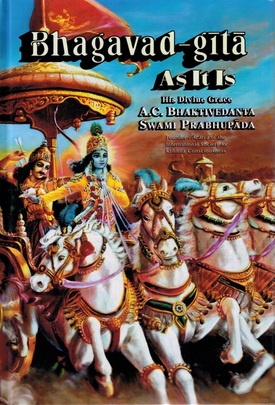
Jayadvaita Swami changed Bhagavad-gita So-called As It Is, which says DHYANA-yoga for the sixth chapter IN SPITE of Srila Prabhupada calling it SANKHYA-yoga in many, many places.
Question arises: This seems such a NEEDLESS change. How dare one correct Srila Prabhupada on this one?
Your servant, no ill intended,
Bhakta Torben
—
Here we post many more examples where Prabhupada says that the sixth chapter of Bhagavad-gita As It Is deals with sankhya-yoga:
“So we have been discussing Bhagavad-gita. In Second Chapter, the Lord has very elaborately explained the constitutional position of the living entity, and the whole first portion of the Six Chapter. The Bhagavad-gita is divided into three portions. The first six chapter, the second six chapters and the third six chapters. Actually just like this book, there are two hard covers, and in the middle there is the substance, writing. So the first six chapters, they are just like two coverings. Karma-yoga and jnana-yoga. And the middle six chapters, well-protected, that is bhakti-yoga. So at the end of the first six chapters, Krsna concludes the yoga system. In the Sixth Chapter He has explained the sankhya-yoga system and the concluding portion of the sankhya-yoga system is:
yoginam api sarvesam
mad-gatenantar-atmana
sraddhavan bhajate yo mam
sa me yuktatamo matah”
[Bg. 6.47] >>> Ref. VedaBase => Bhagavad-gita 6.47 — Ahmedabad, December 12, 1972
“Thus end the Bhaktivedanta Purports to the Sixth Chapter of the Srimad-Bhagavad-gita in the matter of Sankhya-yoga Brahma-vidya.” >>> Ref. VedaBase => Bg 6.47
“Prabhupada: Hare Krsna. Sankhya-yoga is the astanga-yoga. This sitting posture and meditation, this is called sankhya-yoga.
(69/02/16 Los Angeles, Bhagavad-gita 6.13-15)
“Lord Caitanya’s teachings are identical to those given by Lord Kapila, the original propounder of sankhya-yoga, the sankhya system of philosophy. This authorized system of yoga recommends meditation on the transcendental form of the Lord. There is no question of meditating on something void or impersonal. One can meditate on the transcendental form of Lord Visnu even without practicing involved sitting postures. Such meditation is called perfect samadhi. This perfect samadhi is verified at the end of the Sixth Chapter of the Bhagavad-gita, where Lord Krsna says, “And of all yogis, the one with great faith who always abides in Me, thinks of Me within himself, and renders transcendental loving service to Me-he is the most intimately united with Me in yoga and is the highest of all. That is My opinion.”” (Bg. 6.47) >>> Ref. VedaBase => Cc. 1975-Preface
“It is our duty to act in Krsna consciousness because we are constitutionally parts and parcels of the Supreme. The parts of the body work for the satisfaction of the entire body, not for the individual parts. The goal is the satisfaction of the complete whole. Similarly, the living entity should act for the satisfaction of the supreme whole, the Supreme Personality of Godhead, and not for his own personal satisfaction. One who can do this is the perfect sannyasi and the perfect yogi. In the first verse of the Sixth Chapter of Bhagavad-gita, the chapter dealing with sankhya-yoga, Bhagavan Sri Krsna states,
anasritah karma-phalam
karyam karma karoti yah
sa sannyasi ca yogi ca
na niragnir na cakriyah
“One who is unattached to the fruits of his work and who works as he is obligated is in the renounced order of life, and he is the true mystic, not he who lights no fire and performs no work.”” >>> Ref. VedaBase => PoP 1: Yoga as Action
“Krsna Himself does not sit down idly. All His pastimes are filled with activity. When we go to the spiritual world, we will see that Krsna is always engaged in dancing, eating, and enjoying. He does not sit down to meditate. Is there any account of the gopis meditating? Did Caitanya Mahaprabhu sit down to meditate? No, He was always dancing and chanting Hare Krsna. The spirit soul is naturally active. How can we sit down silently and do nothing? It is not possible. Therefore, after Sri Krsna outlined the sankhya-yoga system in the Sixth Chapter of Bhagavad-gita, Arjuna frankly said,
yo ‘yam yogas tvaya proktah
samyena madhusudana
etasyaham na pasyami
cancalatvat sthitim sthiram
“O Madhusudana [Krsna], the system of yoga which You have summarized appears impractical and unendurable to me, for the mind is restless and unsteady.” (Bg. 6.33) Although Arjuna was highly elevated and was Krsna’s intimate friend, he immediately refused to take up this sankhya-yoga system.” >>> Ref. VedaBase => PoP 1: Yoga as Action
“In this Sixth Chapter, in which the Lord speaks of the sankhya-yoga system, He states from the very beginning that one cannot become a yogi unless one renounces the desire for sense gratification.” >>> Ref. VedaBase => PoP 2: Mastering the Mind and Senses
“In this Sixth Chapter of Bhagavad-gita, the system of sankhya-yoga, which is the meditational astanga-yoga system, is emphasized.” >>> Ref. VedaBase => PoP 4: Moderation in Yoga
“Here it is clearly stated that there are many types of yogis-astanga-yogis, hatha-yogis, jnana-yogis, karma-yogis, and bhakti-yogis — and that of all the yogis, “he who always abides in Me” is said to be the greatest of all. “In Me” means in Krsna; that is, the greatest yogi is always in Krsna consciousness. Such a yogi “abides in Me with great faith, worshiping Me in transcendental loving service, is most intimately united with Me in yoga, and is the highest of all.” This is the prime instruction of this Sixth Chapter on sankhya-yoga: if one wants to attain the highest platform of yoga, one must remain in Krsna consciousness.” >>> Ref. VedaBase => PoP 8: Failure and Success in Yoga
Devotee: “These preface perfection by devotional service which alone can award peace to the human being and is the highest goal of life. Thus end the Bhaktivedanta purports to the Fifth Chapter of the Srimad Bhagavad-gita on the subject of karma-yoga or acting in Krsna consciousness.”
Prabhupada: All right. Then we shall… Sankhya-yoga shall I begin today or next day? This is a new chapter, we shall begin next day. (end) >>> Ref. VedaBase => Bhagavad-gita 5.26-29 — Los Angeles, February 12, 1969
Prabhupada: Now, here it is clearly stated that of all yogis, there are different kinds of yogis. Astanga-yogi, hatha-yogi, jnana-yogi, karma-yogi, bhakti-yogi. So bhakti-yoga is the highest platform of yoga principles. So Krsna says here, “And of all yogis.” There are different kinds of yogis. “Of all yogis he who always abides in Me,” in Krsna. Me means Krsna says “in Me.” That means one who is keeping always in Krsna consciousness, “abides in Me with great faith, worshiping Me in transcendental loving service is most intimately united with Me in yoga, and is the highest of all.” This is the prime instruction of this chapter, Sankhya-yoga, that if you want to become perfect yogi of the highest platform, then keep yourself in Krsna consciousness and you become the first-class yogi. >>> Ref. VedaBase => Bhagavad-gita 6.46-47 — Los Angeles, February 21, 1969
“If you want to learn Krsna, if you want to know Krsna, then you have to take this process. Mayy asakta-manah partha yogam. And if you practice this yoga, krsna-yoga, or bhakti-yoga, then you become the topmost of all yogis. That is also stated in the Sankhya Yoga chapter of Bhagavad-gita:
yoginam api sarvesam
mad-gatenantar-atmana
sraddhavan bhajate yo mam
sa me yuktatamo matah”
[Bg. 6.47] >>> Ref. VedaBase => Bhagavad-gita 7.1 — Calcutta, January 27, 1973
“In Europe and America the yoga principle is very popular because they think by practice of yoga, they’ll have very good health and they can use their senses very nicely. That is yoga system. The fatty woman goes to the yoga class for reduce fat. That is yoga system. You see. Somebody is going to practice yoga system for making right the liver action. You see. Here is yoga: vasudeva-para yogah. That is… Krsna also says in the Yoga chapter, Sankhya-yoga chapter, Krsna says,
yoginam api sarvesam
mad-gatenantar-atmana
sraddhavan bhajate yo mam
sa me yuktatamo matah”
[Bg. 6.47] >>> Ref. VedaBase => Srimad-Bhagavatam 1.2.28-29 — Vrndavana, November 8, 1972
“These Krsna conscious persons, people, they are also yogis, bhakti-yogis. They are the best of the yogis. As we see in the Bhagavad-gita, in the chapter in which Sankhya yoga has been explained, the conclusion is, yoginam api sarvesam: [Bg. 6.47] “Of all the yogis…” Yoginam api sarvesam mad-gatenantar-atmana: “One who is thinking within himself about Me, Krsna,” mad-gaten… sraddhavan, “with faith and love,” bhajate mam, “engaged in My devotional service,” sa me yuktatamo matah, “he is the first-class yogi. He is the first-class yogi.” >>> Ref. VedaBase => Srimad-Bhagavatam 5.5.1 — London, August 30, 1971
“Of course, those who are too much engrossed with the bodily concept of life, they have been recommended to practice the hatha-yoga system. That is also mentioned in the Srimad-Bhagavad-gita. Just like you’ll find in the “Sankhya-yoga.” This Bhagavad-gita As It Is, as we have published, page number 153, there is a statement how one should practice this transcendental meditation. Verse number thirteen and fourteen, it is said, “One should hold one’s body, neck and head erect in a straight line.” >>> Ref. VedaBase => Northeastern University Lecture — Boston, April 30, 1969
“Prabhupada: Yoginam api sarvesam: “Of all the yogis…” Yoginam api sarvesam. That is the last verse of the yoga chapter, sankhya-yoga chapter. Yoginam… When Arjuna said that “This practice of astanga-yoga is not possible for me.” >>> Ref. VedaBase => Room Conversation — December 13, 1970, Indore
“Therefore it is conclusive that so called yoga followers are simply cheated and they are wasting their time. I have already explained these points in the Sankhya yoga chapter of the Bhagavad-gita As It Is, so you read them carefully and present it, point by point, in suitable occasions.” >>> Ref. VedaBase => Letter to: Satsvarupa — Hawaii 19 March, 1969







 Arsa-Prayoga
You must be logged in to post a comment.