Debate: Ter Kadamba Das versus Ajit Krishna Dasa

The following exchange between Ter Kadamba Das (disciple of Kadamba Kanana Swami, who is disciple of Jayadvaita Swami) and Ajit Krishna Dasa took place on facebook Tuesday 1st Juli 2014.

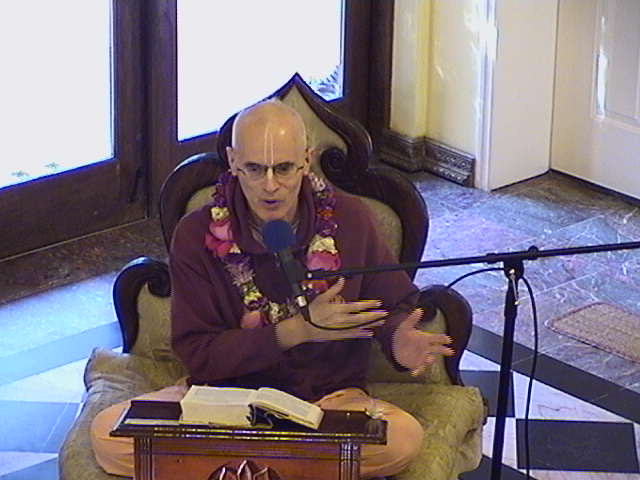
14324279_675617275936525_8383774334663058082_oTer Kadamba Das preaching: “Ask a Monk – Any Topic”. Well, when  asked about the book changes he deleted my questions and blocked me on facebook!

Ter Kadamba Das: For some odd reason there is still some confusion in ISKCON about book editing. I think this article should clear everything up: http://www.sivaramaswami.com/en/2010/01/02/“the-mystery-of-the-edited-books”/

And

Ter Kadamba Das: “Prabhupada has on some occasions found errors in text he personally wrote, and complained about the lack of editing.”

Ajit Krishna Dasa: Dear Ter Kadamba Prabhu! Dandavat pranam! Jaya Srila Prabhupada!

You wrote:

“Prabhupada has on some occasions found errors in text he personally wrote, and complained about the lack of editing.”

Prabhupada wanted his English edited, but to a limited degree only. Where does Prabhupada state that he wants his personally typewritten sanskrit translations edited? In the Rascal Editor conversation (1977) Prabhupada specifically became angry at changes to his sanskrit translations:

Prabhupada: The nonsense, they are… They are correcting my trans… Rascal.

In 1977 Srila Prabhupada also said they could only divide the synonyms – not change them:

Prabhupada: This of should be strictly forbidden.
Radha-vallabha: So no corrections. That makes it simple.
Prabhupada: They can divide the synonyms. That’s all.
Radha-vallabha: Synonyms. So even…
Prabhupada: That is his tendency, to correct. That’s very bad. He should not do that.
Radha-vallabha: So I’ll just forget this, then.
Prabhupada: The system is: whatever authority has done, even there is mistake, it should be accepted.
Radha-vallabha: Oh.
Prabhupada: Arsa-prayoga. That is ha… He should not become more learned than the authority. That is very bad habit….
Prabhupada: Why finish it? Whatever is done is done. No more….
Radha-vallabha: Well, now that this system of no corrections anywhere, that makes it very simple. Then he can’t do anything. I don’t think he wants to, either. It makes it more simple for him. It makes him very uncomfortable.
Prabhupada: No corrections.
(Room Conversation 27 february, 1977)

In chapter one of the 1983 edition of Bhagavad-gita there are around 130 changes to Srila Prabhupada’s own personally typewritten sanskrit translations. You can see the change here:

TAMPERING WITH PRABHUPADA’S PERSONALLY TYPEWRITTEN SANSKRIT TRANSLATIONS (BG, CHAPTER ONE):

https://arsaprayoga.wordpress.com/…/tampering-with…/

CHANGES TO PRABHUPADA’S PERSONALLY TYPEWRITTEN SANSKRIT TRANSLATIONS (STATISTICS FOR BG, CHAPTER ONE):

https://arsaprayoga.wordpress.com/…/changes-to…/

If any links are broken I shall gladly provide them.

65.92% of the changes to the sanskrit synonyms in chapter one are “Modifications not according to Srila Prabhupada’s draft while the original edition follows Srila Prabhupada’s draft.”

In light of the above statements from Srila Prabhupada, how is this justified?

Jayadvaita Swami has not only corrected mistakes. I have documented this in an e-book. Here in something from the introduction:

Many changes have been made to Srila Prabhupada’s books since his departure in 1977. As we all know this has caused a lot of controversy.

This e-book presents new evidence to the effect that the BBT International, and Jayadvaita Swami in particular, have overstepped their authority by making changes that Srila Prabhupada did not want.

The articles in this e­-book will show you that the changes to Srila Prabhupada’s books cannot be justified by arguments like

• We are changing Srila Prabhupada’s books back to what he actually said in his original manuscript.
• We are making the book “Closer to Prabhupada”.
• We are only correcting grammar, commas, capitalization etc.
• We are only correcting the mistakes of previous editors
• No unnecessary changes have been made

On the contrary, these articles will document that the BBT International have

• Deleted many of Prabhupada’s own chosen words and sentences (even those also found in his ”original manuscript”)
• Added their own words and sentences (which means these word and sentences are also not to be found in the ”original manuscript”)
• Changed Prabhupada’s own personally typewritten sanskrit translations.
• Made unnecessary change of syntax (sentence structure).

We humbly ask that you read this e‐book, and also visit the website http://www.arsaprayoga.com for much more information and many more examples of changes to Srila Prabhupada’s books.

Thank you!

The e-book can be found here.

Looking forward to your kind reply, prabhu!

Your servant,
Ajit Krishna Dasa

Ter Kadamba Das: Ajit krishna Prabhu. I deleted your comment because I find it offensive to the Vaisnavas. Jayadvaita Swami is my param guru, and I cannot allow you to use my timeline to blaspheme him. The gaudia vaisnava parampara is a siksa line, and that means we don’t just read Prabhupada’s books and then speculate on the meaning – we check with the senior devotees, the self realized souls, if we have understood correctly. You do not do that, and that makes your arguments invalid. Even worse is to take segments of letters or conversations (rather than the books themselves) in order to push our own issues. I posted an article by HH Sivarama Swami because that makes it authorized. Whatever I may come up with in my tiny brain is superfluous if I don’t check it with the self realized souls. The same goes for you. You have effectively sacrificed the association of the devotees in order to push your issue about the book editing, and I find that sad. I don’t mean to attack you, I am truly writing this in an attempt to help you, even though it may not seem so. For what it is worth, I consider you a devotee of the Lord, and I believe you are honestly trying to serve Prabhupada to the best of your ability. Hare Krishna my friend!

Ajit Krishna Dasa: Dear Ter Kadamba Prabhu! Dandavat pranam! Jaya Srila Prabhupada!

You say you find my comment offensive. If you hear blasphemy of devotees there are three things you can do. In the Nectar of Devotion it is stated:

“If someone is heard blaspheming by words, one should be so expert that he can defeat the opposing party by argument. If he is unable to defeat the opposing party, then the next step is that he should not just stand there meekly, but should give up his life. The third process is followed if he is unable to execute the above-mentioned two processes, and this is that one must leave the place and go away.” (NOD, Ch. 9, Blasphemy)

Instead of deleting my comment it would have been better service to your param guru if you had defeated my arguments.

You say I do not consult senior devotees to check my understanding. In fact I do. I have quite a network of senior devotees and friends whom I consult often, and who encourage me in my opposition against the changes to Srila Prabhupada books. I have simply chosen to listen to OTHER senior devotees than you listen to. You have used your discriminative powers and chosen your authorities, and I have used my discriminative powers and chosen mine (including my own Guru Maharaja who was against the changes to Srila Prabhupada’s books).

Our respective authorities simply contradict each other on certain points. If we want to find out who is correct regarding the book changes, and who is actually blaspheming who (am I blaspheming your param guru, or is your param guru blaspheming Srila Prabhupada?), then we have to see who’s points are backed by guru, sadhu and sastra, logic and observation.

If you had answered the points I raised in my comments, then we actually would have had a chance to settle the matter and see who of us is actually following bona fide authorities.

You claim I “take segments of letters or conversations (rather than the books themselves) in order to push our own issues.” But as I mentioned before, instead of simply deleting my comment and throwing unsubstantiated accusations it would be a better service to your param guru if you actually defended your own case with the help of guru, sadhu and satra, logic and observation.

In order to defend your case, and thus bring this exchange to a befitting level of intelligence, you need to show specifically what is wrong with the points I presented, including whatever quotes from Prabhupada I posted.

I hope you will do that, and I hope to hear from you soon.

Your humble servant,
Ajit Krishna Dasa

Ter Kadamba Das deleted both my above comments shortly after they were posted. Later he deleted the whole thread, including his own opening statement.

Jayadvaita Swami’s “Then it is alright” argument defeated

On BBT International’s website we find this video:

Direct link: https://www.youtube.com/watch?v=IlqbnzzL_28

In the video Jayadvaita Swami says:

”I went back and re-edited especially the translations in the first canto. Especially the first perhaps three chapters where I thought their were a lot of short comings. And I typed up all the translations – after I finished all the work, I typed up all the translations in one manuscript and put them in an envelope, and Prabhupada was coming to New York where I was at the time. Prabhupada came, and I put all the translations in an envelope, and I wrote a cover letter explaning what I have done, and asking him whether it was okay. And then I brought it up to Prabhupada’s quarters at 55th Street in New York–the New York temple—with the idea that I would leave them with his secretary and come back later. But Prabhupada was right there, and so he…I offered obeisances, and he had me, you know: ”What do you do in here?” ”What have you come for?” Not in those words, but, you know, he inquired was I was doing. And I explained that I had come to deliver this. So Prabhupada had me start reading right in his presence. And I began, I read the first verse, the second verse, the third verse. I went through a few verses, and Prabhupada stopped me. Prabhupada was listening very carefully, he stopped me. ”So what you have done?” And I said: ”Well, Srila Prabhupada, I have edited to try to bring it closer to what you originally said.” Prabhupada said: ”What I have said?” I said: ”Yes, Srila Prabhupada!” Then Prabhupada: ”Then it is alright!”, and that was it. ”Then it is alright!” ”What I have said?”, ”Then it is alright!”

 A few points about this story:

1. Jayadvaita Swami’s story is merely anecdotal evidence which is considered a rather unreliable and dubious support of a  claim. No one is really able to investigate the truth value of his story. To use anecdotal evidence as the foundation for changing the books that are supposed to guide mankind the next ten thousands years will surely create doubt about the authority of the changed books.

As Srila Prabhupada said about such stories:

“Just like in our ISKCON there are so many false things: “Prabhupada said this, Prabhupada said that.””
(Srila Prabhupada Letter, 7/11/1972)

“They misunderstand me. Unless it is there from me in writing, there are so many things that “Prabhupada said.”” (Srila Prabhupada Letter, 2/9/1975)

And as Jayadvaita Swami says:

“If Srila Prabhupada didn’t clearly and definitely say it, and if it first came up after 1977 whatever it is, don’t trust it. Rule of Thumb.” (Diksa-Diksa, Where the Rtvik People are Wrong,  p. 85, Jayadvaita Swami)

Jayadvaita Swami started circulating his story after the book changing controversy started, and there is no evidence to support that it is true. Therefore, “…don’t trust it. Rule of Thumb.”

Skærmbillede 2013-12-06 kl. 20.59.15

2. Jayadvaita Swami seems to conclude that since Prabhupada approved the verses that he brought him, then he also approved that he could change all his books using the same method – even after his disappearance. But this is an unwarranted extrapolation, because Jayadvaita Swami extrapolate far beyond the range of available data, namely from one single instance of editing to more or less all future instances of editing. But from his story no justification for such an extrapolation can be found. The only conclusion to be deduced (if the anecdote is at all true) is that what Jayadvaita Swami did to the very specific verses he brought Prabhupada was okay.  No more, no less.

3. If Jayadvaita Swami’s anecdote is true, then Prabhupada told him that if he had made the text closer to what Prabhupada originally said, then it was okay.

However, in my previous articles to Jayadvaita Swami I have referred to articles where it is clearly documented that he has:

  • Deleted many of Prabhupada’s own chosen words and sentences (even those also found in his ”original manuscript”)
  • Added his own words and sentences (which means they are also not to be found in the ”original manuscript”)
  • Changed Prabhupada’s own personally typewritten sanskrit translations.

The article ”The Duty of the Finger” demonstrates all these types of changes made to Prabhupada’s Bhagavad-gita As It Is:

https://arsaprayoga.wordpress.com/2013/10/24/enjoying-the-self-within-or-the-duty-of-the-finger-bg-4-38/

Now, I think most devotees around the world would like to know what Jayadvaita Swami thinks Prabhupada would have said if he had told him:

”Well, Srila Prabhupada, in my editing I have deleted some of your own chosen words and sentences! And I have also invented some completely new words and sentences and put them in where I felt they would do a good job! And since we at the BBT International are now ”accomplished sanskrit scholars” we have gone through some of your own typewritten sanskrit translations and changed them also.”

What do we, honestly, think Prabhupada would have answered? Then try to extrapolate that answer to the changes Jayadvaita Swami has made to Prabhupada’s Bhagavad-gita As It Is.

New questions to Jayadvaita Swami and Dravida Prabhu

Help us by “liking” and “sharing” this post!

Screenshot 2014-02-04 23.14.45

This article was sent to the BBT International through their website (http://www.bbtedit.com/contact) and to Jayadvaita Swami and Dravida Prabhu’s personal e-mails (jswami@pamho.net, jayadvaita.swami@pamho.net, dravida108@gmail.com) the 7th Feb. 2014. We asked them to comment on the points raised.

So far we have not received any reply.

Dear Jayadvaita Swami and Dravida Prabhu! Dandavat pranam! Jaya Srila Prabhupada!

I have been studying more of your changes to Srila Prabhupada’s books, and I here give links​ to some articles I have written about these changes​. I have also given some links to older articles which I have not sent to you before.

 I have ​to give you links, since some or all of the articles include pictures and videos​ which I can’t post inside​ these mails, and if I attach them it will​ be confusing.

Please see the articles here:

TAMPERING WITH PRABHUPADA’S PERSONALLY TYPEWRITTEN SANSKRIT TRANSLATIONS (BG, CHAPTER ONE):
https://arsaprayoga.wordpress.com/2013/12/09/tampering-with-prabhupadas-personally-typewritten-sanskrit-translations/

CHANGES TO PRABHUPADA’S PERSONALLY TYPEWRITTEN SANSKRIT TRANSLATIONS (STATISTICS FOR BG, CHAPTER ONE):
https://arsaprayoga.wordpress.com/2014/01/21/changes-to-prabhupadas-personally-typewritten-sanskrit-translations-statistics-for-bg-chapter-one/

BBT(I) HAS DELETED THE COMPLETE FOREWORD OF PRABHUPADA’S BHAGAVAD-GITA AS IT IS:
https://arsaprayoga.wordpress.com/2014/01/13/bbti-has-deleted-the-complete-foreword-of-prabhupadas-bhagavad-gita-as-it-is/

FRIVOLOUS CHANGE OF CHAPTER-HEADING:
https://arsaprayoga.wordpress.com/2014/01/02/frivolous-change-of-chapter-heading/

T​O​ “​ENGAGE” or “​DESTROY”:
https://arsaprayoga.wordpress.com/2014/02/01/to-engage-or-destroy-bg-11-32/

COVERS SHOULD BE THE SAME REGARDLESS OF LANGUAGE:
https://arsaprayoga.wordpress.com/2013/09/01/covers-should-be-the-same-regardless-of-language/

PRABHUPADA’S INSTRUCTIONS ON FRONT COVERS NOT HONORED:
https://arsaprayoga.wordpress.com/2013/12/24/prabhupadas-instructions-on-front-covers-not-honered/

“PHALANX” IN BG. 1.2 AND BG. 1.11 (JAYADVAITA SWAMI’S DOUBLE STANDARD):
https://arsaprayoga.wordpress.com/2013/10/23/phalanx-in-bg-1-2-and-bg-1-11-jayadvaita-swamis-double-standard/

NOT BACK TO THE “ORIGINAL MANUSCRIPT” (BG. 1.2):
https://arsaprayoga.wordpress.com/2013/10/22/not-back-to-the-original-manuscript-bg-1-2/

REMOVING “ETERNAL” FROM BHAGAVAD-GITA, AS IT IS (2.30):
https://arsaprayoga.wordpress.com/2013/08/31/removing-eternal-from-bhagavad-gita-as-it-is-2-30/

LORD RAMACANDRA REMOVED FROM BHAGAVAD-GITA, AS IT IS (10.31 PURPORT):
https://arsaprayoga.wordpress.com/2013/09/12/lord-ramacandra-removed-from-bhagavad-gita-as-it-is-10-31

​I, and many thousands of devotees world wide, are anxiously waiting for explanations of the many changes I have asked Jayadvaita Swami about several months ago. They can be found here:

Jayadvaita Swami has authorized KBI (Krishna Book Inc.) in a mood of cooperation

Help us by “liking” and”sharing” this post!

Screenshot 2014-01-20 09.40.04

Recently BBT International (BBTI) and Jayadvaita Swami have been making public announcements about the importance of devotees buying books from the BBT exclusively. In this way they are indirectly saying that devotees should not buy books from Krishna Books Inc. (KBI) who distributes Srila Prabhupada’s original, pre-1978, books. To substantiate their claim they refer to a letter from Srila Prabhupada saying that all centers should buy from the BBT.

There are several problems with the statements of BBTI and Jayadvaita Swami.

First of all BBT and BBT International (BBTI) are not identical. To make such a claim, or to try to give that impression, is to deceive the devotees. BBT International and Jayadvaita Swami have been actively engaging in this act of deception from the inception of BBTI, and most devotees in ISKCON have accepted their claims blindly. But there is a difference between BBT and BBTI.

Continue reading

Responding to Dravida Prabhu’s “defense” of the book changes (Jan. 2014)

Help us by “liking” and “sharing” this post!

dravidaDravida Prabhu

By Ajit Krishna Dasa

This a a response to Dravida Prabhu’s article “The Book Changes – A Defense” (posted on the Sampradaya Sun (01.13.2014).

Basically Dravida Prabhu’s attempted defense boils down to two wellknown fallacious arguments often presented by the BBT International:

1. Prabhupada trusted Jayadvaita Swami pre Nov 14th 1977. Therefore the editing Jayadvaita Swami has done after Prabhupada’s disappearance (post Nov. 14th 1977) is also approved.

2. The books are made “closer to Prabhupada” by making them closer to the so called original manuscript (which is really only a draft).

Let us look at each of these fallacious arguments.

Continue reading

Prabhupada on Brahma-Samhita: It should be left as is!

Help us by “liking” and “sharing” this post!

Sri_Brahma-Samhita-cover

In Brahma Samhita by Bhaktisiddhanta Sarasvati Thakura, Introduction, page xvi (page 7 in the PDF):

“…As per Srila Prabhupada’s instructions regarding the publication of this volume, Bhaktisiddhanta Sarasvati’s somewhat technical and sometimes difficult prose has been left intact and virtually untouched. Fearing that any editorial (grammatical and stylistic) tampering with Bhaktisiddhanta’s text might result in inadvertant changes in meaning, Prabhupada asked that it be left as is, and the editors of this volume have complied with his wishes…”

Ramesvara Prabhu remembers regarding that same publication og Brahma Samhita:

“What about the incorrect grammar? “Prabhupada’s reply, “You cannot change one comma, not even a comma, not even a punctuation mark, that is the etiquette.” So that was just another one of those super heavy instructions that the etiquette in dealing with a great acarya’s books is that whatever he has done it’s eternal and it can never be changed. And I believe that all of this was part of Prabhupada’s training us . He wanted to train people who would be entrusted with his books.” (Ramesvara, Interview 1979)

The Brahma-Samhita was published with only very slight editing done:

  • Typographical errors was corrected.
  • Capitalization was standardized.
  • Sanskrit terms in devanagari script appearing within the English text was transliterated.
  • Already transliterated terms have been adjusted to international standards.
  • The original devanagari text was added for each verse. It was followed by roman transliteration, and then by a word-for-word translation into English (none of these appeared in the original edition).

This very limited editing of Brahma-Samhita were made under the instructions of our Sampradaya-Acarya, Srila Prabhupada, who is a pure unalloyed devotee of the Lord. No mistakes and no offenses would be made as long as he supervised and approved the work. In addition, the editors were honest and wrote in the introduction precisely what they did to the original work. The BBT International should also be honest by letting the readers know what they did to Prabhupada Bhagavad-gita As It Is. Something like this ought to be written:

Despite the fact that Srila Prabhupada educated us in the vedic principle of arsa-prayoga that state that the words of the acarya should not be corrected, we, the editor’s, have made extensive posthumous changes and corrections to Prabhupada’s personally typewritten sanskrit translations. We have also added completely new words, sentences and paragraphs and made re-arrangement of words and sentences. Original paintings and pictures have been removed and exchanged with new ones. We have also removed the foreword and changed the cover. All editing is done without the approval of the author. We can’t guarantee that our editing is free from mistakes, or that the author would be pleased with the editing.

Tampering with Prabhupada’s personally typewritten sanskrit translations (BG, Chapter One)

Please help us by “liking” and “sharing” this post!

Skærmbillede 2013-12-09 kl. 22.03.15

The text below was sent to the BBT International through their website (http://www.bbtedit.com/contact) and to Jayadvaita Swami and Dravida Prabhu’s personal e-mails (jswami@pamho.net, jayadvaita.swami@pamho.net, dravida108@gmail.com) the 7th Feb. 2014. We asked them to comment on the points raised.

So far we have not received any reply. 

By Ajit Krishna Dasa and Bhaktin Anna Nygaard

In regard to the posthumous editing of Prabhupada’s Bhagavad-gita As It Is, Jayadvaita Swami has expressed (emphasis added by Arsa-Prayoga staff):

1982:

“Comparing each verse in the book with the text of the manuscript, I made only those changes that to me seemed worthwhile. I tried to be conservative and not make needless changes.” (Jayadvaita Swami, letter to senior devotees, October 25, 1982)

1986:

“As you know, and as we kept in mind while doing the work, Srila Prabhupada staunchly opposed needless changes.” (Jayadvaita Swami, Letter to Amogha Lila, 1986)

1995:

“When Srila Prabhupada conveyed to us the conclusions of the previous acaryas, he did so perfectly, preserving and transmitting the philosophy exactly as it is, neither watering anything down, nor covering anything over, nor leaving anything out. He gave us the essence of everything.

We therefore don’t need to add anything, subtract anything, or change anything. We need only faithfully serve Srila Prabhupada’s orders, and everything will be revealed.” (Jayadvaita Swami, Sri Vyasa Puja book August 19,1995)

2009:

On BBT International’s website we find this video:

Transcription of the video:

Arsa-Prayoga is a very important principle. The editor should never have the mentality that he’s better than the author, that he has something more to contribute than the author does, that the author really doesn’t know what he is doing, but he knows what he is doing. That’s offensive! And that is…ruins everything! It is an offense to the acarya. The idea, however, that this sort of sanctity that the author’s text has, or that the words of the author have, somehow extends to the mistakes of the editors…is weird! “It’s an offense to correct the mistakes of previous editors!” Are they acaryas? Are they paramahamsas? Are they infallible? They are wonderful devotees, they did wonderful service. But they made mistakes. Understandably.”

Summing up Jayadvaita Maharaja’s standpoints from the above:

In 2009 Jayadvaita Swami admits that the principle of arsa-prayoga is very important, and that it is an offense to violate it. He admits that Prabhupada’s text has sanctity, and that the editors of Prabhupada’s books should never think they are better than Prabhupada and has more to contribute than Prabhupada.

In 1995, twelve years after Prabhupada’s disappearance, Jayadvaita Swami said that we should not add, subtract or change anything in the teachings Prabhupada has given us. Earlier, in 1982 and 1986, Jayadvaita Swami claimed that they had in mind not to make needless changes in their editing of Bhagavad-gita As It is, because Prabhupada staunchly opposed such needless changes. They only changed what they felt was worthwhile changing. However, Jayadvaita Swami further states that the sanctity that Prabhupada’s texts have do not apply to the work done by Prabhupada’s editors (he seem not to appreciate the fact that this work was later approved by Prabhupada. Does Prabhupada’s approval not have sanctity?)

In this way Jayadvaita Swami makes it seem as if he did not add, subtract or change any of Prabhupada’s direct words (except for the grammatical errors, capitalisation and commas). However, during the last three decades, we and many other devotees have observed and documented numerous needless changes made by Jayadvaita Swami to Prabhupada’s Bhagavad-gita As It Is. And in spite of Jayadvaita Swami’s own seeming interest in not adding, subtracting or changing anything in Srila Prabhupada’s teachings, the posthumously edited books contain all of these three types of edits (adding, subtracting and changing).

We will now start a series of articles documenting the changes made to the sanskrit synonyms (word for word meanings) in the first six chapters of the Bhagavad-gita As It Is. Why only the first six chapters?

According to Jayadvaita Swami the first five or six chapters of the draft (often referred to as the ”original manuscript”) to the Bhagavad-gita As It Is was personally typewritten by Srila Prabhupada himself.

Jayadvaita Swami writes on his website:

”Some books Srila Prabhupada wrote out in longhand or typed himself. These include Easy Journey to Other Planets, Sri Isopanishad, the first and second cantos of Srimad-Bhagavatam, the first five or six chapters of Bhagavad-gita As It Is,…” (Jayadvaita Swami, Editing the Unchangeable Truth, How Were the Books Written?, Reprinted from ISKCON Communications Journal, Volume 11, 2005)

If anything has sanctity, apart from the finished manuscripts that Prabhupada sent to the press for printing, it must be the words that he himself wrote on his type-writer. We would most certainly not expect to see any changes made to these. Even if they contain mistakes, these mistakes should not be corrected according to the principle of arsa-prayoga.

However, we do see significant changes made to the sanskrit translations that Prabhupada personally wrote on his type-writer. By comparing the posthumously edited 1983 edition with both the 1972 MacMillan edition and the so called “original manuscript” we see that the 1972 MacMillan edition is much closer to and faithful to Prabhupada’s original words.

This is especially interesting because Prabhupada was very concerned with better knowing disciples that had become “learned” in sanskrit:

“…a little learning is dangerous, especially for the Westerners. I am practically seeing that as soon as they begin to learn a little Sanskrit immediately they feel that they have become more than their guru and then the policy is kill guru and be killed himself.” (from a letter to Dixit das on 18 Sep 1976)

We now publish for the first time a complete list over all the changes made to Prabhupada’s personally type-written sanskrit translations. Here is the complete list for Chapter One.

PDF: bg-comparing-OM-1972-1983-ch1  

Direct link: https://www.dropbox.com/s/d9u09z5jxnwj50d/bg-comparing-OM-1972-1983-ch1.pdf

New video with Ramesvara Prabhu from “Prabhupada Memories” about the book changes

Help us by “liking” and “sharing” this post!


Question to Jayadvaita Swami: What would Prabhupada say to you?

Help us by “liking” and “sharing” this post!

This letter was sent to Jayadvaita Swami the 6th Dec. 2013:

Dear Jayadvaita Swami! Dandavat pranam! Jaya Srila Prabhupada!

Some weeks have passed since our last e-mail exchange. I hope  you are in the process of answering the questions I linked to in my first two e-mails to you? Otherwise they are here:

E-mail 1: https://arsaprayoga.wordpress.com/2013/10/23/letter-to-jayadvaita-swami-23rd-oct-2013/

E-mail 2: https://arsaprayoga.wordpress.com/2013/10/28/e-mail-exchange-between-jayadvaita-swami-and-ajit-krishna-dasa/

These are questions that thousands of devotee’s around the world would like to see answered as soon as possible.

While awaiting your promised answers, I am constantly researching the changes made to Prabhupada’s books. Recently I saw this video posted on BBT International’s website:

Direct link: https://www.youtube.com/watch?v=IlqbnzzL_28

In the video you say:

”I went back and re-edited especially the translations in the first canto. Especially the first perhaps three chapters where I thought their were a lot of short comings. And I typed up all the translations – after I finished all the work, I typed up all the translations in one manuscript and put them in an envelope, and Prabhupada was coming to New York where I was at the time. Prabhupada came, and I put all the translations in an envelope, and I wrote a cover letter explaning what I have done, and asking him whether it was okay. And then I brought it up to Prabhupada’s quarters at 55th Street in New York–the New York temple—with the idea that I would leave them with his secretary and come back later. But Prabhupada was right there, and so he…I offered obeisances, and he had me, you know: ”What do you do in here?” ”What have you come for?” Not in those words, but, you know, he inquired was I was doing. And I explained that I had come to deliver this. So Prabhupada had me start reading right in his presence. And I began, I read the first verse, the second verse, the third verse. I went through a few verses, and Prabhupada stopped me. Prabhupada was listening very carefully, he stopped me. ”So what you have done?” And I said: ”Well, Srila Prabhupada, I have edited to try to bring it closer to what you originally said.” Prabhupada said: ”What I have said?” I said: ”Yes, Srila Prabhupada!” Then Prabhupada: ”Then it is alright!”, and that was it. ”Then it is alright!” ”What I have said?”, ”Then it is alright!”

 A few points about this story:

1. Your story is merely anecdotal evidence which is considered a rather unreliable and dubious support of a  claim. No one is really able to investigate the truthvalue of your story. To use anecdotal evidence as the foundation for changing the books that are supposed to guide mankind the next ten thousands years will surely create doubt about the authority of the changed books.

As Srila Prabhupada said about such stories:

“Just like in our ISKCON there are so many false things: “Prabhupada said this, Prabhupada said that.””
(Srila Prabhupada Letter, 7/11/1972)

“They misunderstand me. Unless it is there from me in writing, there are so many things that “Prabhupada said.”” (Srila Prabhupada Letter, 2/9/1975)

And as you yourself say:

“If Srila Prabhupada didn’t clearly and definitely say it, and if it first came up after 1977 whatever it is, don’t trust it. Rule of Thumb.” (Diksa-Diksa, Where the Rtvik People are Wrong,  p. 85, Jayadvaita Swami)

You started circulating your story after the book changing controversy started, and there is no evidence to support that it is true. Therefore, “…don’t trust it. Rule of Thumb.”

Skærmbillede 2013-12-06 kl. 20.59.15

2. You seem to conclude that since Prabhupada approved the verses that you brought him, then he also approved that you could change all his books using the same method – even after his disappearance. But this is an unwarranted extrapolation, because you extrapolate far beyond the range of available data, namely from one single instance of editing to more or less all future instances of editing. But from your story no justification for such an extrapolation can be found. The only conclusion to be deduced (if your anecdote is at all true) is that what you did to the very specific verses you brought Prabhupada was okay.  No more, no less.

3. If your anecdote is true, then Prabhupada told you that if you had made the text closer to what Prabhupada originally said, then it was okay.

However, in my previous e-mails to you I have referred to articles where it is clearly documented that you have:

  • Deleted many of Prabhupada’s own chosen words and sentences (even those also found in his ”original manuscript”)
  • Added your own words and sentences (which means they are also not to be found in the ”original manuscript”)
  • Changed Prabhupada’s own personally typewritten sanskrit translations.

The article ”The Duty of the Finger” demonstrates all these types of changes made to Prabhupada’s Bhagavad-gita As It Is:

https://arsaprayoga.wordpress.com/2013/10/24/enjoying-the-self-within-or-the-duty-of-the-finger-bg-4-38/

Now, I think most devotees around the world would like to know what you think Prabhupada would have said if you had told him:

”Well, Srila Prabhupada, in my editing I have deleted some of your own chosen words and sentences! And I have also invented some completely new words and sentences and put them in where I felt they would do a good job! And since we at the BBT are now ”accomplished sanskrit scholars” we have gone through some of your own typewritten sanskrit translations and changed them.”

What do you, honestly, think Prabhupada would have answered? Then try to extrapolate that answer to the changes you have made to Prabhupada’s Bhagavad-gita As It Is.

Your servant, Ajit Krishna Dasa

Prabhupada: “It is not the ornamentation, it is the ecstasy.”

Help us by “liking” and”sharing” this post!”

From “Srila Prabhupada and His Disciples in Germany” (emphasis by Arsa Prayoga staff):

sp-disciples-germany

“On September 9th, Asoka-kumara and I arrived in Los Angeles. Asoka-kumara came along to transcribe and compose the translations, but unfortunately he could not use the BBT typesetting equipment immediately. Special fonts for German, with diacritic marks for the Sanskrit transliteration, had to be ordered, and that took a couple of months.

“Dr. Wolf, a friendly gentleman in his late sixties, was glad to have us there. He was fluent in six languages, and he was eager to help us to bring the translation of Prabhupada’s books up to a more academically acceptable level. But his involvement turned out to be a double-edged sword. He had many valuable suggestions to improve the style, but his vision was flawed by mundane considerations. He found many of Srila Prabhupada’s original English expressions objectionable and wanted to change them in the German edition. For example, he felt it was simply unacceptable to compare Krsna’s legs to elephant trunks.

“In the following weeks, we had several heated discussions, and when Dr. Wolf saw that I was not prepared to change Prabhupada’s words just because a description didn’t fit his conception, he began to question Prabhupada’s position. Having fled Nazi Germany, he felt that our vision of Prabhupada’s authority was dangerously similar to the inflated image of Hitler in the 1930s. Finally he stopped coming. But he sent me a letter explaining his stand on the way our books should be presented. He mailed a copy to Prabhupada, who replied to him as follows.”

I beg to acknowledge receipt of a copy of a letter sent to Sriman Vedavyasa dated January 14,1976.

Mundane books are written by imperfect persons. Everyone has his own theory, which means he is imperfect. The Srimad-Bhagavatam says if there is a real presentation of spiritual understanding, then, even if it is presented in broken language, it is accepted by high, saintly persons, because it glorifies the Supreme Person. On the other hand, if literature is highly metaphorically composed, if it does not glorify the Lord, it is compared to a place inhabited by the crows.

Actually, if some literature doesn’t carry any real knowledge, what is the use of ornamental language? We are not interested in presenting ornamental language.

In India the system is that people go to see the Jagannatha Deity. The Deity is not very beautiful from the artistic point of view, but still people attend by the thousands. That sentiment is required. Similarly with our kirtana we are only using drums and karatalas but people come to the point of ecstasy. It is not the ornamentation, it is the ecstasy. This ecstasy is awakened by sravanam kirtanam by devotees. I hope this makes everything clear.”

The actual letter from Srila Prabhupada:

Letter to: Dr. Wolf

Mayapur
29 January, 1976
76-01-29
Los Angeles
My dear Dr. Wolf,
Please accept my blessings. I beg to acknowledge receipt of a copy of a letter sent to Sriman Vedavyasa dated January 14, 1976.
Mundane books are written by imperfect persons. Everyone has his own theory, which means he is imperfect. The Srimad-Bhagavatam says if there is a real presentation of spiritual understanding, then even if it is presented i broken language, it is accepted by high, saintly persons, because it glorifies the Supreme Person. On the other hand, if literature is highly metaphorically composed, if it does not glorify the Lord, it is compared to a place inhabited by the crows.
Actually, if some literature doesn’t carry any real knowledge, what is the use of ornamental language? We are not interested in presenting ornamental language.
In India the system is that people go to see the Jagannatha Deity. The Deity is not very beautiful from the artistic point of view, but still people attend by the thousands. That sentiment is required. Similarly with our kirtana we are only using drums and karatalas, but people come to the point of ecstasy. It is not the ornamentation, it is the ecstasy. This ecstasy is awakened by sravanam kirtanam by devotees. I hope this makes everything clear.
Hoping this meets you well.
Your ever well-wisher,
A.C. Bhaktivedanta Swami
ACBS/tkg