Arsha Prayoga Part (I) – Resistance To Change

Help us by “liking” and “sharing” this post!

By Locanananda Prabhu (originally posted on his blog)

ct45-0541

Let me first offer my prostrated obeisances unto the lotus feet of that supreme swan-like devotee of the Lord, our spiritual master, His Divine Grace A.C. Bhaktivedanta Swami Prabhupada, by whose mercy the fallen souls of Kali Yuga may taste the sweetness of the narrations of the pastimes of the Lord and His pure devotees. As the bonafide representative of Sri Vyasadeva, he composed a mountain of transcendental literature to enlighten the entire human society, explaining even the most confidential truths regarding vaisnava philosophy.

His Divine Grace Srila Prabhupada displayed all of the symptoms of an empowered jiva soul, working tirelessly to distribute the transcendental message of love of Godhead throughout the world. It is therefore the duty of his followers to preserve the legacy and protect the honor of such a great spiritual personality whose every moment was dedicated to the spreading of Krishna consciousness.

To guarantee that his teachings would not be forgotten in the oblivion of time, Srila Prabhupada created the Bhaktivedanta Book Trust and, assisted by his disciples, he astounded the academic community with his literary output. What follows is a brief account of Srila Prabhupada’s struggle with the BBT staff to keep the final version of his books intact by resisting what he called the “American disease” of always wanting to change things. As will be seen from the letters and conversations cited in this article, Srila Prabhupada would finally insist on an “absolutely no change” policy based on the principle of “arsa prayoga”.

That unwanted changes were being made to his books came to his attention as early as 1975, and it quickly became a pressing matter. In a letter to the production manager of the Bhaktivedanta Book Trust, Srila Prabhupada expressed his alarm that changes he had not approved were appearing in print.

“I will have to see personally what are the mistakes in the synonyms and also how you intend to correct them. I was not satisfied with the corrections that were made before. I saw some changes which I did not approve. Nitai may correct whatever mistakes are there, but the corrected material must be sent to me for final approval.” (Letter to Radha-vallabha dasa dated 1-5-76)

Srila Prabhupada never gave anyone carte blanche to make revisions in his books. This letter confirms that any changes to his books would require his personal approval before being printed.

A few months later, the issue of change was raised again by Radha-vallabha dasa regarding the text of several volumes of the Srimad Bhagavatam which were soon to be reprinted. Srila Prabhupada advised him, “There is no need for corrections for the First and Second Cantos. Whatever is there is all right.” (Letter of 5-4-76) Seeing how persistent his BBT managers were to implement change in the text and presentation of his books, His Divine Grace wrote again to Radha-vallabha dasa in August, 1976, this time more firmly:

“Do not try to change anything without my permission.”

Srila Prabhupada consistently stated that he did not want anything to be changed unnecessarily. Any changes they thought would be an improvement in the text would require his written authorization.

The most serious violation of this instruction actually came years later, after Srila Prabhupada’s disappearance, when BBT personnel decided to print a new version of the Bhagavad-gita. It is a well known fact that His Divine Grace never authorized anyone to re-edit the Bhagavad-gita As It Is. If Srila Prabhupada ever intended to make changes in the Gita, the ideal opportunity for him to say so came in a room conversation that took place on February 24, 1977 in Mayapur. On that occasion, Radha-vallabha dasa was describing how the upcoming printing of the Bhagavad-gita was going to require so much paper that it would take seventy-six train cars to transport it (1.5 million copies). Srila Prabhupada absolutely did not suggest making any corrections before this largest printing ever of the Bhagavad-gita As It Is. In fact, and to the contrary, in a discussion that took place three days later, he established a definitive “no change” policy that he wanted applied henceforward to all of his books. The tendency to want to make corrections was now a very serious problem, and Srila Prabhupada dealt with it.

The transcribed conversation of February 27, 1977 presented below clearly indicates that Srila Prabhupada would never have approved of anyone changing the final edited version of his writings, even after his disappearance. In this exchange, His Divine Grace states that for a disciple to see mistakes in his production-ready finished manuscripts was a bad habit that had to be given up. Even though the one correction his disciple Jagannatha dasa wanted to propose would not have changed the wording of the verse, Srila Prabhupada warned that to make any change whatsoever was “strictly forbidden”. As a servant of his spiritual master, Radha-vallabha dasa was obliged to accept Srila Prabhupada’s instruction that the text should be left exactly as is and that making corrections should never be contemplated.

To further enlighten his disciple, Srila Prabhupada explained the rule of “arsa prayoga”, that whatever the acharya has given, it should be accepted. The tendency to think oneself sufficiently qualified to correct one’s authority is not only a breach of vaisnava etiquette, but is an offense in the service of the spiritual master.

If one continues to see mistakes that he thinks need to be corrected, Srila Prabhupada says, “He is the mistake.” Due to his incomplete understanding, Radha-vallabha dasa reasoned, “So if we think there is some mistake, we should just forget about it.” Srila Prabhupada corrects him again, saying that one should not even think his authority has made a mistake. His opinion was that since Jagannatha dasa tended to see mistakes in the writings of the acharya, he was an irresponsible man who could not be relied upon. Srila Prabhupada then made his final point, that our true purpose is not served by becoming so-called scholars able to find errors in the books of the spiritual master, but by becoming advanced in devotion to Krishna. Radha-vallabha dasa finally got the point, that Srila Prabhupada was establishing the rule of “no corrections anywhere” once a book was submitted to his department for publication.
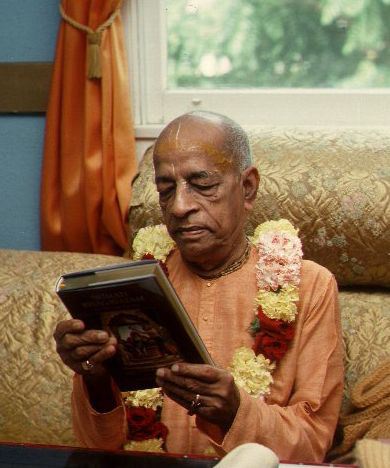
prabhupada-admiring-book

Srila Prabhupada was assigning to the BBT trustees the duty of safeguarding his books from being changed in the slightest by anyone who had not been specifically ordered to do so.

The principle of “arsa prayoga” was again referred to on June 22, 1977 when Srila Prabhupada was in Vrndavana, India. In the middle of a reading of the Srimad Bhagavatam, Srila Prabhupada objected when he heard the synonym that was given for the word “sadhu”. The word-for-word translation said, “it is relevant,” but Srila Prabhupada said, “No. ‘Sadhu’ means ‘devotee’.” The editors had changed his translation, and he found this unacceptable. He spoke as though he had been betrayed by a dangerous element within his movement. His authority was being minimized by his own disciples to whom he had entrusted his most lasting contribution: his books. A number of devotees present voiced their objection to the production staff’s practice of deleting entire sections from certain books, and they mentioned discrepancies they had found in the Sanskrit to English translations. Literally hundreds of changes had already been made in the text of Srila Prabhupada’s books from one printing to the next and the devotees testified that the potency was not the same.

Srila Prabhupada asked for suggestions from his senior men to resolve this dilemma and they offered their advice. After hearing various proposals, Srila Prabhupada’s conclusion was that, “The next printing should be again to the original way.” He then ordered his secretary to contact the GBC man he wanted to entrust this matter to in Los Angeles where the press was located. “So you bring this to Satsvarupa. They cannot change anything.”

Drawing from these letters and conversations, we can gain some insight into Srila Prabhupada’s struggle to keep his books as they were. One should rightly conclude that he would never have approved of the wholesale changes that were made by the BBT editors after his disappearance. He would have expected the BBT trustees to resist on his behalf. The unnecessary and unauthorized changes in the Bhagavad-gita alone number more than seven hundred, so where is Srila Prabhupada’s signed approval for such changes to be made? And where are the rave reviews of the revised edition from scholars and professors praising the editors for having improved the original version of the Gita published by their spiritual master? We do not expect to see any testimonials from these mundane personalities glorifying the “revised and enlarged” edition of the Gita. After all, which scholar would approve of having his own writings altered after his physical demise?

The adulteration of Srila Prabhupada’s Bhagavad-gita As It Is was the first major milestone in the BBT’s refusal to follow the rule of arsa prayoga (the unholy practice of dishonoring the acharya), a program which reached its zenith when they declared in court that Srila Prabhupada was simply a writer hired by ISKCON to compile the Vedic classics. We do not know what kind of apology can be made by the BBT’s editors and trustees at this point, but it is our humble opinion that the best way to make amends for past transgressions would be to accept Srila Prabhupada’s instruction that “the next printing should be again to the original way.”

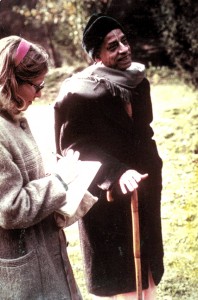
“They are ruining my books”

Help us by “liking” and “sharing” this post!

Ramesvara interview

A very, very important document has just become public. It is a 300+ page transcript of a 1979 interview with Ramesvara Dasa (manager of the Bhaktivedanta Book Trust when Prabhupada was with us). Ramesvara Dasa was the person directly in charge of printing Srila Prabhupada’s books.

In this interview Ramesvara Dasa is giving a completely honest account of Srila Prabhupada’s instructions to him in regard to not changing his books and on many other points also.

This is perhaps the most important document that has come to light in ISKCON since 1977.

You can download and read the PDF file of the interview by clicking on:

Ramesvara-interview-1979

Please read it…

Here are some of the important instructions on responsible publishing given by Prabhupada to Ramesvara Dasa:

Ramesvara Dasa:

“And also at that Mayapur meeting of 1976 we had had meetings with Prabhupada about the Bhagavatam. We prepared for that Mayapur festival a color board which showed all the volumes of the Bhagavatam drawn in for each Canto what the color would be. And Srila Prabhupada approved the color scheme for the Srimad-Bhagavatam for all the reprints. But he warned us emphatically that this must be the very very last change that is ever to be made in the Srimad-Bhagavatam.

“Prabhupada at that time approved the new design for the Krsna Book trilogy and then he approved the standardization in terms of lettering and so on for the Bhagavatams and he approved the new color board. That is what the 12 Cantos are going to look like. Prabhupada was very happy to see that we had made a plan. But then he got very grave and said, “Now, this is the final plan, this is the final approved standard, there can never be any more changes.” He was emphatic, he was insistent, and he pounded it into our heads.

“What about the incorrect grammar? “Prabhupada’s reply, “You cannot change one comma, not even a comma, not even a punctuation mark, that is the etiquette.” So that was just another one of those super heavy instructions that the etiquette in dealing with a great acarya’s books is that whatever he has done it’s eternal and it can never be changed. And I believe that all of this was part of Prabhupada’s training us . He wanted to train people who would be entrusted with his books.

“…you can get a first hand understanding of how intense Prabhupada was and how concerned he was that in the future no one ever be allowed to make changes in his books. This was more than just a preoccupation with Prabhupada. This was a, you could call this a transcendental phobia, that the entire movement would without any shadow of a doubt be completely wasted and all the work and effort of all the devotees that Prabhupada was directly as well as his own efforts would all be ultimately lost if his books we re changed. That was his attitude. He expressed that attitude very clearly in 1974 in that conversation and in that letter you’ll see the statements Prabhupada made about how everything will be ruined if his books are changed.

“With the BBT, the size of the books, the type of art in the books and so on, on principle Prabhupada would not allow changes even if the change was an improvement. Just to teach that principle of don’t change.”

“Prabhupada just explained how everyone’s a rascal for daring to touch anything in his books. The greatest anxiety he has is that after he’s gone we will add things to his books that are bogus, we will take things out that are bona fide, we will make changes in his books and the whole work for 10,000 years, his plan Prabhupada was working on, it will all be spoiled by us because of our tendency to change. And Prabhupada gave an example that the disease to do things differently is so inherent in the Americans that for the sake of doing things differently we would walk on our hands rather than our feet.”

Don’t you dare change the picture on my book! I have deliberate ly chosen the picture of Visnu because I want this book to be attracting the Mayavadis and impersonalists. So that was the first direct instruction that I had received from Prabhupada which gave me an understanding o f how much he would meditate on every facet of his books. The art, the size, the pictures, who the market was. And I began to realize Prabhupada is very much on top of his book design and publishing.”

If you put anything bogus in my book , this is my greatest fear that you will ruin my book and the whole book will be ruined because of you!

“The first of many experiences I’ve had with Prabhupada literally drilling me , pounding it into my head that you’re never allowed to change anything in his books. He trained me so intensely on this point. Even when the changes make sense he wouldn’t let me change. Just to train me.”

Ramesvara-interview-1979

To Edit or Not To Edit – That Is The Question

Help us by “liking” and “sharing” this post!

By Govinda Dasi (ACBSP)

govinda-dasi-sp

Govinda Dasi & Srila Prabhupada

The book editing issue is a very serious one, perhaps the most serious issue in ISKCON today. I have seen the attractive and seemingly authentic website promoting these changes, but most of it is propaganda, a lot of it based on speculation of what took place. It is most unfortunate that this has occurred, as it endangers everything Srila Prabhupada came to this world to do. He came from Krishna Loka “to write some books.”

So many times, Prabhupada said, referring to his books, “NO Changes!” “Don’t change anything!” but this instruction, given repeatedly, has been glossed over by so many elaborate, and often untruthful, explanations and excuses.

The very real danger is that his books could be lost in time, as some changes lead to more changes, and “tinkering” with editing is the disease of the American nature. Prabhupada complained of this “Westerner disease” often, and there is ample evidence that he did not want his books changed after he left this world.

Posthumous editing is not respected by the scholarly community (see Dr. John Trimble, famous for his Writing with Style) nor is it respected or approved of by the Gaudiya Vaishnava tradition. The opinions of such famous Western scholars as Dr. Trimble, and the opinions of famous Gaudiya scholars, have not been included in this BBT-edit website — because they are NOT favorable. So the reasoning for doing this massive edit is flawed, i.e. “to make the books more acceptable to scholars…”

Continue reading

Debate with Kancana-valli Devi Dasi on the book changes

This debate was posted on the Sampradaya Sun Dec. 15 2012 : http://www.harekrsna.com/sun/editorials/12-12/editorials9486.htm

Exchange with the BBT’s Kancana-valli dd

BY: SUN STAFF

Dec 15, 2012 — CANADA (SUN) — Following is a recent exchange between Ajit Krishna dasa and the BBT’s Kancana-valli devi dasi regarding changes to Srila Prabhupada’s books. The thread of discussion began with this inquiry from Ajit Krishna dasa on November 25, 2012:

Continue reading

“Rascal Editors”

This is a key conversation in relation to the editing and publishing of Prabhupada’s books. Many points from it have been debated, and many future posts on this blog will no doubt refer and discuss points from it. So here we bring the complete conversation as a reference.

Prabhupada: Where are others?
Tamala Krsna: Shall I get other people? Satadhanya Maharaja? (long pause)
Prabhupada: That… Find this verse, munayah sadhu prsto ‘ham… [SB 1.2.5].
Tamala Krsna: There’s no index. It’s not a new Bhagavatam. There’s no index in this Bhagavatam. Munayah sadhu…? “The Effects of Kali-yuga” chapter? Is that the verse, about the effects of Kali-yuga? No. (background talking, looking for verse)
munayah sadhu prsto ‘ham
bhavadbhir loka-mangalam
yat krtah krsna-samprasno
yenatma suprasidati
[SB 1.2.5]
“munayah — of the sages; sadhu — this is relevant; prstah — questioned; aham…”
Prabhupada: No? What is that? Sadhu? What is that? Munayah?
Tamala Krsna: Says, “sadhu — this is relevant.”
Prabhupada: Relevant?
Tamala Krsna: That’s what it’s translated as, “this is relevant.” May be a mistake.
Devotee (1): It’s a mistake.
Prabhupada: Munayah?
Tamala Krsna: “Munayah — of the sages; sadhu — this is relevant…”
Prabhupada: The nonsense, they are… They are correcting my trans… Rascal. Who has done this? Munayah is addressing all these munis. Continue reading

Response to Niscala Devi Dasi on the book changes

My response to an article by Niscala Devi Dasi posted on oneiskcon.com:

http://www.oneiskcon.com/the-actual-changes-to-srila-prabhupadas-books-and-his-standards/#comment-655

As Govinda Dasi Mataji says posthumous editing must be done according to a specific protocol. It needs to be stated on the book that is was posthumously edited, by whom, what was edited, and the date.

The problem with the new gita is that it not only lacks these informations, but it also has Prabhupada’s signature as if it was his original version, even though he never asked for this new edition nor approved it.

Editing something in Prabhupada’s books can only be done if the following is verified:

1. The change must not violate the principle of arsa-prayoga.

2. The change must be done

  • on the basis of a direct order, or
  • the change must be shown to be permitted, and/or
  • approved after it is done.

3. The change must not be needless (Prabhupada did not want needless changes)

4. We must be 100% sure (there must absolutely no doubt) that Prabhupada wanted this specific change (a principle of caution must be observed).

We know the proper protocol for posthumous editing never has been followed by BTT International. In addition to this: Can anyone present just one change in Prabhupada’s books made posthumously that does not violate at least of the above points? Continue reading

Jayadvaita Swami admits there is no authorization

Vyapaka Dasa: “Do you have explicit instructions from Srila Prabhupada authorizing you to make post-samadhi changes to his books?”
Jayadvaita Swami: “No.” (Published e-mail correspondence between Jayadvaita Swami og Vyapaka Dasa)

Govinda Dasi: “…Jayadvaita Maharaja has said that Srila Prabhupada did not specifically give him the permission to…”
Jayadvaita Swami: “I never got an explicit word from Srila Prabhupada to do this work at an explicit time.” (Conversation between Govinda Dasi and Jayadvaita Swami about the posthumous changes to Prabhupada’s Bhagavad-gita, Honolulu on Jan 19, 2003)

“To my knowledge, Srila Prabhupada never asked us to re-edit the book.” (Jayadvaita Swami’s Letter to Amogha Lila 1986)

“Dear Yasodanandana Prabhu,

Please accept my humble obeisances. All glories to Srila Prabhupada!

In answer to your questions, I don’t have any original tape recording of any kind of Srila Prabhupada authorizing the editorial changes in the Gita. And despite scouring the GBC resolutions from 1979-83, I found no reference to the Bhagavad-gita whatsover. It seems the assignment of Jayadvaita Swami to perform that task was unpublished–at least I couldn’t find it in the GBC resolutions made widely available.

Hoping this meets you well, I remain

Your servant,
Dravida dasa [Editor for the BBT(I)]” (Letter from Dravida Dasa to Yasodanandana Dasa, Date: Wed, 24 Apr 1996 09:45:12 -0700)

So both Jayadvaita Swami and Dravida Dasa, who are the leading editors for the BBT International admit there is no instruction from Prabhupada to edit his Bhagavad-gita As It Is (or any other of his books).